
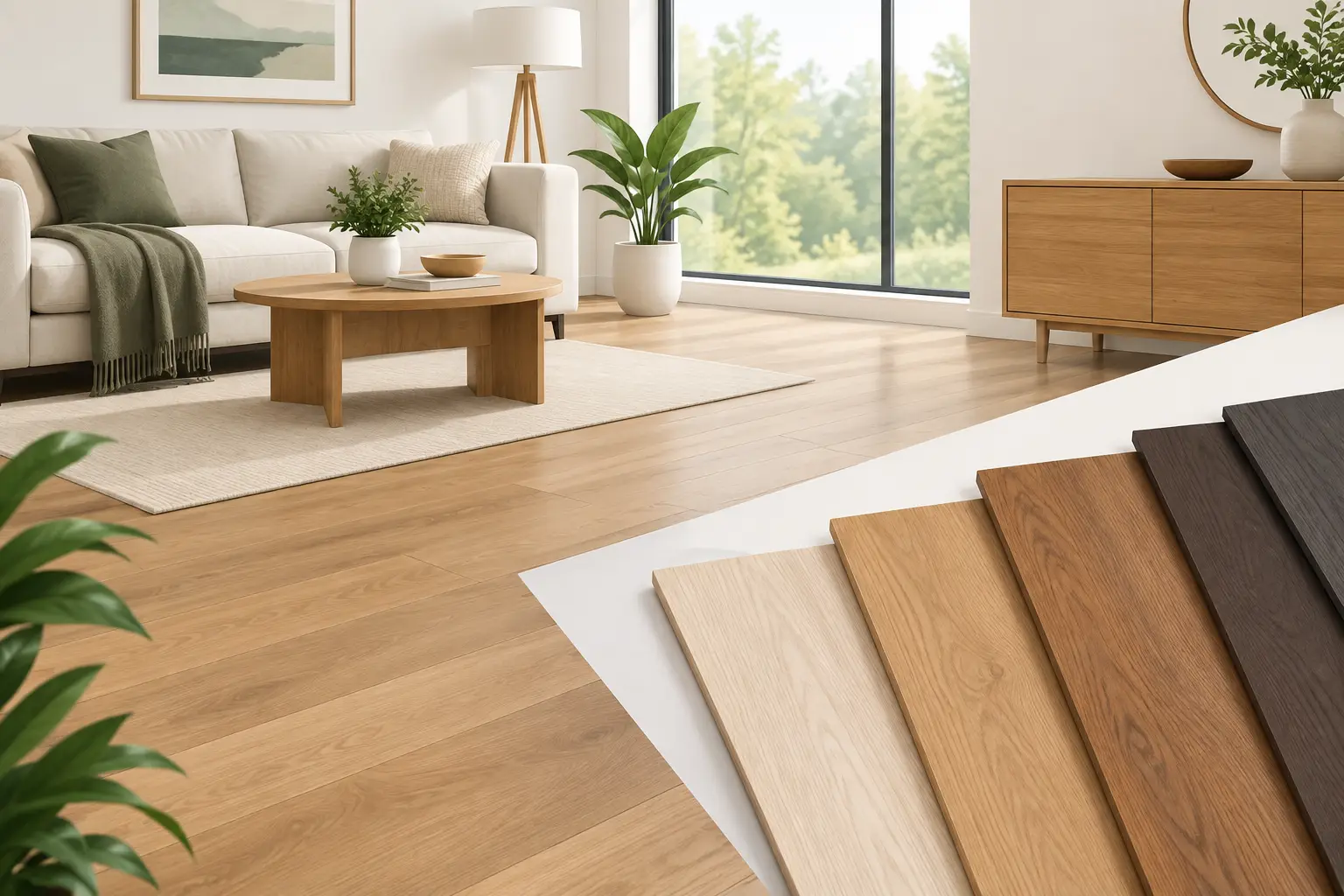
A floor can make a kitchen feel newly finished, give a dated living room a cleaner look, or connect an entire renovation without changing the home’s layout. That is why wood floor color selection deserves more attention than choosing a sample under showroom lighting. The right color has to work with your home’s natural light, existing finishes, daily traffic, and the rooms you plan to update next.
For many homeowners, the goal is not to follow a short-lived trend. It is to install a floor that looks right on day one and still supports the home’s value and style years from now. Start with the space as a whole, then narrow the choices based on how you live in it.
Start With the Fixed Elements
Before comparing wood stains, look at what will remain in the room. Cabinet color, countertops, brick fireplaces, stone tile, painted trim, interior doors, and large furniture all affect how a floor reads. A warm oak floor may look balanced next to cream cabinets and brass hardware but overly yellow beside cool gray tile and bright white walls.
This does not mean every finish has to match. In fact, exact matching often makes a room look flat. The better approach is coordination. Identify the main undertones already present: warm tones such as beige, cream, honey, and red-brown, or cooler tones such as gray, blue, charcoal, and crisp white. Then choose a floor color that supports those undertones without competing with them.
If a kitchen remodel is part of the plan, make flooring decisions with the future cabinet and countertop selections in mind. Floors are difficult and costly to change after cabinets are installed. Paint can be adjusted later. A coordinated project sequence prevents a floor from becoming the element everyone has to work around.
See Every Sample in Your Own Light
A wood floor color that looks neutral in a showroom can look much warmer, darker, or grayer at home. Natural light changes through the day, and LED bulbs vary widely in temperature. Large windows, shaded lots, dark wall paint, and nearby brick all change the appearance of the same stain.
Bring several samples into the room and view them in the morning, afternoon, and evening. Place them flat on the floor rather than holding them vertically, since angle affects how light reflects from the grain. If you are refinishing existing hardwood, test stain colors directly on a sanded area of your own floor. The species, age, and grain pattern of the wood will influence the final result.
This step matters especially in Atlanta-area homes with open layouts and strong sunlight. A color that feels perfect in a shaded den may become much lighter near a wall of patio doors. Samples should be judged in the rooms where the finished floor will live.
Light, Medium, and Dark Wood Floors
There is no universal best color. Each range offers a different visual effect and maintenance experience.
Light Wood Floors
Light floors, including natural white oak, pale oak, maple, and lightly bleached finishes, help rooms feel open and bright. They work well in smaller spaces, homes with limited natural light, and renovation plans built around clean, updated finishes. Light wood also tends to hide dust, pet hair, and minor scratches better than very dark colors.
The trade-off is that some pale finishes can show muddy footprints, food spills, or dark debris more clearly. They may also feel too cool if paired with gray walls, cool white cabinets, and little natural warmth elsewhere in the room. Adding warmer textiles, wood accents, or a balanced wall color can keep the result inviting.
Medium Wood Floors
Medium brown and natural oak tones are often the most flexible choice. They bring visible grain and warmth without making the room feel heavy. They also work across many styles, from traditional homes with stained trim to updated kitchens with painted cabinets.
A medium floor can be a practical choice for busy households because it disguises everyday dust and normal wear reasonably well. It is also less likely to look dated if you update paint, furniture, or hardware over time. For homeowners who want a durable choice with broad appeal, this range is hard to beat.
Dark Wood Floors
Dark walnut, espresso, and deep brown floors create contrast and give larger rooms a more formal look. They can look striking with light walls, white trim, and cabinetry that needs a strong grounding element. A dark floor may be the right choice for a home with ample natural light and a clear design direction.
Maintenance is the main consideration. Dark finishes often reveal light-colored dust, pet hair, footprints, and surface scratches more quickly. In a high-traffic family room or kitchen, that can mean more frequent cleaning. Dark floors can also make a small or poorly lit room feel more enclosed, although the effect can be balanced with lighter walls and thoughtful lighting.
Consider Wood Species and Grain
Color is only one part of the finished look. The wood species and grain determine how stain absorbs and how much natural variation will show. Red oak has a pronounced grain and warm undertones. White oak is a popular choice for its more neutral base and ability to accept a broad range of stains. Hickory offers stronger color variation and a more active grain pattern, while maple has a smoother, subtler appearance but can absorb stain unevenly.
Wide planks tend to highlight grain variation and can make a room feel more open. Narrower boards create a more traditional appearance and can suit homes where the goal is to preserve an established character. Neither is automatically better. The important question is whether the board width, grain movement, and color work together in the space.
When choosing engineered hardwood, review full boards or a larger installed sample when possible. A small sample may not show the range of tones and knots that appear across an entire floor.
Plan for Traffic, Pets, and Real Life
A floor should fit the way your household uses the home, not just the look of a staged photo. Entryways, kitchens, hallways, and living rooms need finishes that can handle daily movement. Families with children, dogs, or frequent entertaining should think beyond the stain color and ask about the finish sheen and the floor’s ability to be maintained over time.
Matte and low-sheen finishes are often more forgiving than high-gloss floors. They reduce glare and can make minor scratches less noticeable. A low-sheen medium tone may provide a better day-to-day result than a dramatic dark gloss, even if the darker sample initially makes a stronger impression.
Area rugs and entry mats help protect wood floors, but they should support a good choice rather than compensate for a finish that does not suit the household. A professional installer can also explain which materials and finishes make sense for the rooms being updated.
Create Room-to-Room Flow
Open floor plans benefit from consistent flooring because one color across connected living areas creates visual continuity. In homes with more defined rooms, continuity still has value, particularly through hallways, kitchens, and main living spaces. Too many flooring changes can interrupt the home and make separate updates feel disconnected.
That does not require installing the same wood everywhere. Bedrooms may use a related carpet, bathrooms may need tile, and a porch or deck will call for exterior-rated materials. The key is to choose transitions that feel intentional. Warm wood inside can connect naturally to warm-toned tile in a mudroom or neutral composite decking outside, while a sudden shift from yellow oak to cool gray flooring can feel accidental.
This is where a broader renovation plan helps. If flooring, kitchen work, and a new deck or porch are all on the schedule, the color palette should be considered across the project. Floor's Leader can help homeowners coordinate these decisions so the finished spaces look connected rather than completed in separate phases.
Avoid Chasing a Color Trend
Gray-washed floors, very dark stains, and ultra-pale finishes have all had their moment. Trends can provide useful inspiration, but a trend should not override the character of the house or the homeowner’s maintenance expectations. A color that appears in every online photo may not suit warm brick, traditional cabinetry, limited daylight, or a busy household.
A more reliable approach is to choose a natural color with enough depth to complement future changes. White oak in a soft neutral finish, a balanced medium brown, or a warm natural tone can adapt as paint colors and furnishings change. If you want a more current look, bring that personality in through lighting, wall color, rugs, furniture, and hardware, which are easier to update later.
Make the Final Choice at Full Scale
Do not approve a floor color from a small swatch alone. Ask to see a larger sample, a test area, or completed examples that use comparable wood and finish. Stand back from it. Look at it beside cabinets, wall paint, and trim. Then look again at night with the lights you actually use.
The best wood floor color is the one that supports the home you have and the improvements you plan to make next. Choose a finish that feels right under your everyday lighting, works with the fixed materials, and can handle the life happening on top of it. That is how a new floor becomes a lasting part of a well-finished home.
Get a free quote from Floor's Leader.