
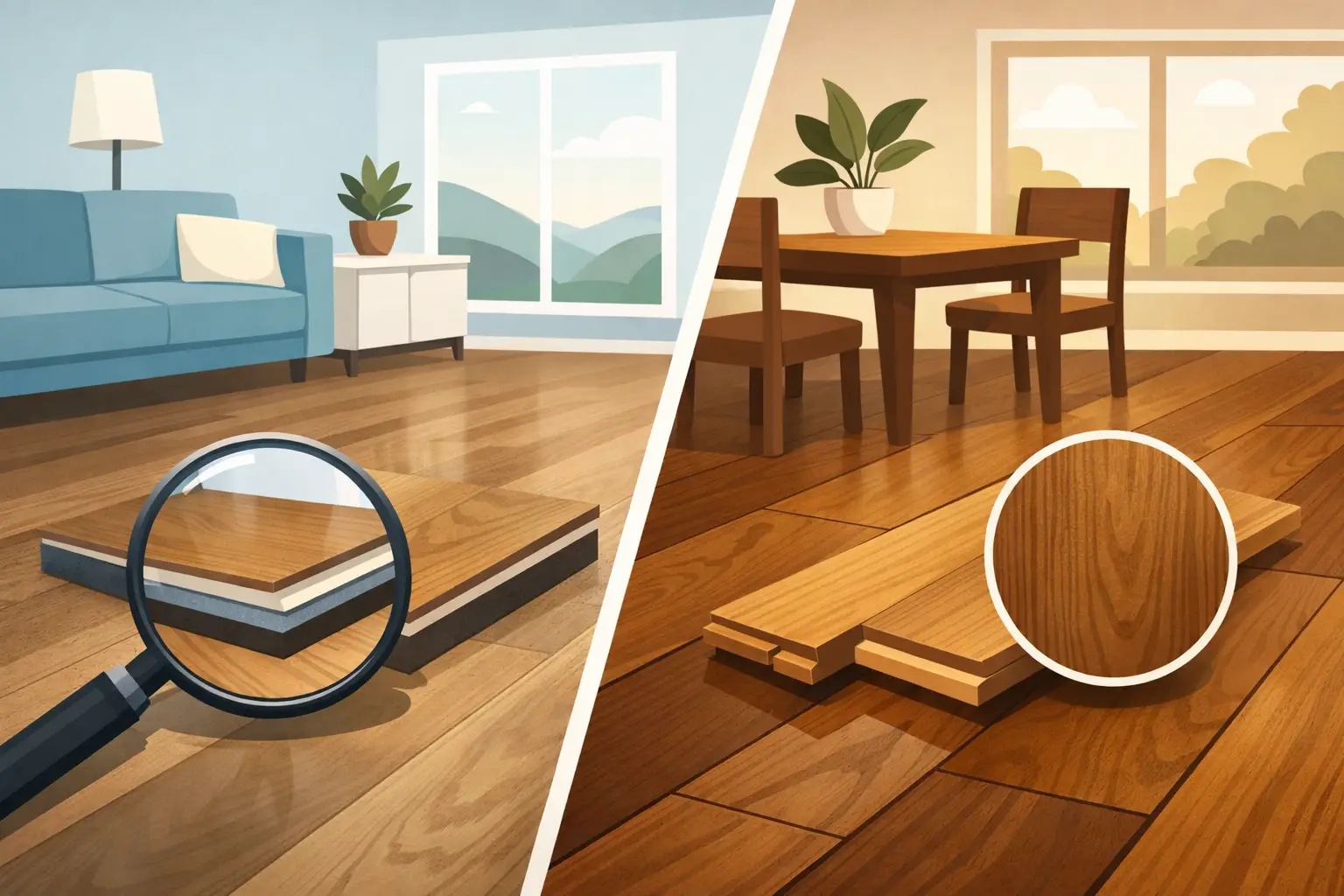
An Atlanta floor has to handle more than daily foot traffic. It may face humid summers, wet shoes at the entry, pets, children, and the wear that comes with an active home. The choice between vinyl versus hardwood affects how each room looks, feels, and performs for years after the renovation is complete.
Both can be the right choice. Hardwood brings natural character and long-term value to living spaces, while modern vinyl offers practical water resistance and a lower-maintenance surface. The better option depends on the room, the condition of the subfloor, your budget, and how you use the home.
Vinyl Versus Hardwood at a Glance
Hardwood is a real wood flooring product, usually installed as solid planks or engineered boards with a genuine hardwood wear layer. It has natural variation in grain, knots, color, and texture. That variation is part of its appeal. A well-selected hardwood floor can make a living room, hallway, dining room, or primary bedroom feel more finished and connected to the rest of a renovation.
Vinyl flooring is a manufactured product. Luxury vinyl plank, often called LVP, is the most common option for homeowners who want the look of wood with a more forgiving surface. Quality vinyl can closely resemble oak, hickory, maple, and other species, including wider planks and matte finishes that work well in updated homes.
The difference is not simply natural versus synthetic. It is also a question of performance. Hardwood can be refinished and repaired in ways vinyl cannot. Vinyl stands up better to routine water exposure and is generally easier to maintain.
When Hardwood Is Worth the Investment
Hardwood is a strong fit for homeowners who want a lasting, high-end finish in dry interior spaces. It works especially well when flooring is part of a larger project, such as opening up a main floor, updating a kitchen, remodeling a family room, or replacing several disconnected floor types with one consistent material.
Real wood adds depth that printed flooring cannot fully duplicate. Light changes throughout the day, and the grain has real texture and variation. Hardwood also gives homeowners more options down the road. Depending on the product and its wear layer, it can often be sanded, refinished, or restained instead of completely replaced.
That repairability matters in established homes. If a floor is scratched by furniture, dulled by years of use, or no longer matches an updated kitchen, refinishing can restore its appearance. A quality hardwood installation is not just a surface replacement. It can be a long-term part of the home.
Hardwood also tends to carry stronger buyer appeal. While resale value depends on the property, neighborhood, floor plan, and overall condition, buyers often recognize real hardwood as a premium feature. For homeowners planning to stay, the value may be just as practical: a floor that can age well rather than needing replacement after one design cycle.
Hardwood Requires the Right Conditions
Hardwood does require more care and planning. Standing water, frequent spills, and high moisture can cause problems over time. Solid hardwood is usually not the first choice for below-grade basements, laundry rooms, or bathrooms. Engineered hardwood can provide more dimensional stability than solid wood, but it still needs protection from excessive moisture.
Atlanta's humidity also makes professional installation important. Wood needs time to acclimate to the home's environment before installation, and the subfloor must be evaluated for moisture, levelness, and structural condition. Skipping those steps can lead to gaps, cupping, movement, or squeaks that affect the finished result.
Where Vinyl Has the Advantage
Vinyl is built for homeowners who want the appearance of wood with fewer concerns around water and everyday messes. It is often a practical choice for kitchens, laundry rooms, mudrooms, lower-level spaces, and homes with pets or young children.
Most luxury vinyl plank products are water-resistant, and many are marketed as waterproof. That does not mean moisture can be ignored. Water can still get beneath planks through gaps, around wall edges, or through a failed transition. But compared with hardwood, vinyl gives homeowners more time to clean up spills without worrying that a wet spot will stain, swell, or warp the flooring.
Vinyl is also softer and warmer underfoot than tile, which can make a noticeable difference in kitchens and high-traffic family spaces. It is quieter than many hard surfaces and generally handles dropped toys, pet nails, and routine movement well. For a busy household, those benefits are not minor details.
Installation can be more straightforward in the right conditions, especially with floating click-lock products. Still, vinyl is not a shortcut around preparation. A subfloor that is uneven, damaged, or damp can telegraph through the finished floor, create movement underfoot, or cause joints to fail. Professional prep remains one of the most important parts of the project.
Vinyl Has Limits, Too
A quality vinyl floor can look convincing, but it is still a printed visual layer. Up close, real wood has more depth and individual character. Vinyl also cannot be refinished. Once the wear layer is damaged or the style feels dated, replacement is usually the solution.
Heavy furniture, sharp objects, and direct sunlight can affect vinyl over time. Lower-quality products may dent more easily or show repeated patterns that make the floor look less natural across a large open area. Product selection matters. Thickness, wear layer, locking system, and underlayment all affect how the floor performs after installation.
Compare Cost Beyond the Initial Price
Vinyl usually has a lower upfront material and installation cost than hardwood. That can make it an attractive option when renovating several rooms, preparing a house for sale, or working within a defined project budget.
Hardwood costs more because the material, preparation, installation process, and finishing work are more involved. If existing hardwood is hidden beneath another floor, refinishing may sometimes be more cost-effective than replacing it, but that depends on its condition and whether repairs are needed.
Initial price should not be the only deciding factor. A vinyl floor may be the smarter investment in a laundry room where moisture protection matters most. Hardwood may justify the added cost in a main living area where the goal is a more permanent architectural finish. The right answer comes from matching the material to the room instead of forcing one product throughout the home.
Choose by Room, Not by Trend
For living rooms, dining rooms, bedrooms, and hallways, hardwood is often the stronger design choice. It creates continuity, works with many cabinet and furniture styles, and can tie together a whole-home renovation. Engineered hardwood can be a good middle ground where a homeowner wants real wood with added stability.
For kitchens, the decision is more personal. Hardwood creates a classic, connected look, especially in an open floor plan, but it requires quick cleanup and sensible protection around sinks and dishwashers. Vinyl is the more forgiving choice for a kitchen that sees frequent spills, pets, and heavy daily use.
Bathrooms and laundry rooms typically favor vinyl because of the moisture risk. In basements or areas with a concrete slab, vinyl is often the simpler choice as well, although proper moisture testing and subfloor preparation are still necessary.
If your goal is one consistent look across the first floor, consider where the real risks are. Some homeowners choose hardwood throughout dry living areas and use a coordinating vinyl in the laundry or bath. Others choose a high-quality vinyl throughout for a unified, practical finish. A good plan can look intentional either way.
Installation Quality Changes the Outcome
Even the best flooring product will underperform if it is installed over an unprepared subfloor. Before choosing vinyl or hardwood, the existing flooring should be removed or assessed, the subfloor checked for flatness and moisture, and transitions planned between rooms.
Details such as plank direction, trim work, floor height, stair noses, door clearances, and connections to tile or carpet affect the final look. These are also the details that help a flooring project work with a kitchen update, fresh paint, new baseboards, or an adjacent deck and porch improvement.
Floor's Leader approaches flooring as part of the finished home, not a stand-alone material decision. The goal is a surface that fits the room, supports the way your household lives, and looks right beside the other improvements you are making.
Before making a final selection, bring home samples and view them in morning light, afternoon light, and the lighting you use at night. Walk on them, place them next to cabinets or paint colors, and think honestly about where water, pets, and daily traffic will land. The floor that performs well in your actual home is the one you will be happiest to see every day.
Get a free quote from Floor's Leader.