
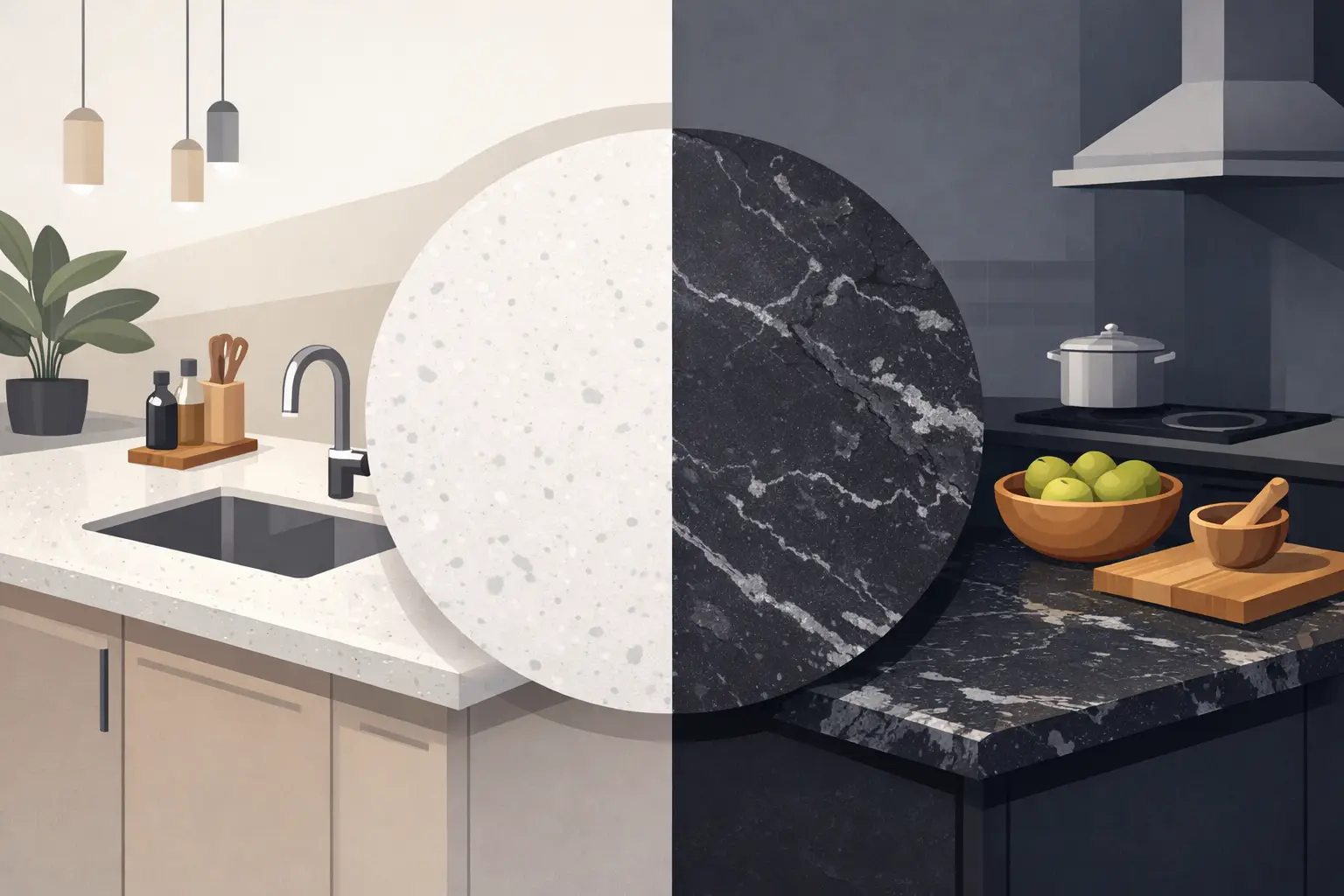
A countertop decision becomes real when the old surface is removed and every cabinet, floor color, backsplash, and light fixture has to work with what goes in next. For homeowners comparing quartz versus granite countertops, the best choice is rarely about which material is universally better. It is about how your kitchen is used, how much maintenance you want, and the finished look you want the room to have.
Both are strong choices for an Atlanta kitchen renovation. Both can add value, handle daily meal prep, and create a finished appearance that makes aging cabinets or new cabinetry look more intentional. Their differences show up in the details: heat, stain resistance, visual variation, maintenance, and how the material fits the rest of the renovation.
Quartz Versus Granite Countertops: The Basic Difference
Granite is a natural stone cut from the earth, then fabricated into slabs for countertops. Every slab has its own mineral pattern, movement, and color variation. A sample is useful, but it will never show the full range of the slab that will be installed in your kitchen.
Quartz countertops are engineered surfaces. They are made primarily from crushed natural quartz combined with resins and pigments. That manufacturing process gives quartz a more controlled appearance. A homeowner can choose a soft white surface with subtle veining, a concrete-inspired gray, or a more dramatic marble look with greater consistency from one section to the next.
Neither material is automatically the premium choice. Granite often appeals to homeowners who want one-of-a-kind natural character. Quartz is a practical favorite for homeowners who want a clean, predictable finish and minimal routine upkeep.
Daily Use and Maintenance
The clearest difference between these materials is their surface behavior. Quartz is nonporous, so it does not need to be sealed. For a busy household, routine care is simple: wipe it with a soft cloth, mild soap, and water. Spills from coffee, oil, wine, or juice are less likely to absorb into the surface when they are cleaned promptly.
Granite is naturally porous to varying degrees. A quality installation includes proper sealing, but granite should be resealed periodically based on the specific stone and how heavily the kitchen is used. Sealing helps prevent liquids from soaking in and leaving stains. It is not a difficult chore, but it is a responsibility that should be part of the decision.
Granite also benefits from quick cleanup, especially around oils, acidic foods, and dark liquids. With normal care, it performs well for years. The difference is that granite asks homeowners to be a little more attentive, while quartz is generally more forgiving during everyday use.
Avoid harsh chemicals, abrasive pads, and aggressive scrubbing on either material. They can dull the finish or affect the surface over time. A countertop is durable, not indestructible, and good habits protect both the material and the investment.
Heat, Scratches, and Real Kitchen Wear
Granite handles heat better than quartz. A hot pan placed briefly on granite is less likely to cause trouble, although using trivets is still the smart long-term practice. Granite is also highly scratch resistant, which makes it well suited for kitchens where cooking happens often.
Quartz is hard and durable, but the resins that bind it can be damaged by high heat. A pan taken directly from the oven or a slow cooker that runs hot should not sit directly on a quartz surface. Extreme heat can discolor, scorch, or crack the countertop. This does not make quartz unsuitable for an active kitchen. It simply means heat protection needs to be part of how the kitchen is used.
Both surfaces can chip, particularly at exposed edges near a sink, dishwasher, or high-traffic corner. Edge profiles, overhang support, and precise fabrication matter. A well-planned countertop installation considers more than the slab itself. It accounts for seams, sink cutouts, cabinet condition, wall irregularities, and how the surface meets the backsplash.
Appearance: Natural Movement or Consistent Color
Granite gives a kitchen natural variation that cannot be duplicated. Some slabs are quiet and uniform; others have bold veins, crystals, or sweeping movement. That variation can become the focal point of the room, especially with simpler cabinet colors and a restrained backsplash.
Quartz gives homeowners more control. If the goal is a bright, coordinated kitchen with clean white cabinets, warm wood flooring, and a backsplash that does not compete for attention, quartz can make the design easier to manage. It is also available in looks that imitate marble without the same level of staining and etching concerns associated with natural marble.
The right visual choice depends on the rest of the house. A heavily patterned granite may look excellent in a traditional kitchen but feel busy beside a strongly grained hardwood floor. A quiet quartz can help connect several finishes, but a very uniform surface may not provide enough character in a larger kitchen with simple cabinetry.
Before making a final selection, view the actual granite slab whenever possible. With quartz, view a full sample or larger display panel rather than making a decision from a small chip. Lighting changes color. A surface that looks crisp white in a showroom may read warmer, cooler, or more gray under your kitchen lighting.
Cost Depends on More Than the Material
Homeowners often expect quartz to cost more than granite, but there is substantial overlap. Entry-level granite can be less expensive than many quartz options. Premium granite with rare color, dramatic movement, or difficult slab layout can cost as much as, or more than, high-end quartz.
The installed price is also shaped by the size of the kitchen, number of seams, edge profile, sink style, backsplash height, demolition needs, and whether cabinets need repair or leveling. A large island with a waterfall edge requires more material and labor than a straightforward perimeter countertop. Cutouts for cooktops, farmhouse sinks, and specialty fixtures also affect the scope.
For that reason, homeowners should compare complete project estimates rather than choosing based on a per-square-foot material price alone. A coordinated kitchen plan can identify where the budget matters most: cabinetry, flooring, countertop material, backsplash, lighting, or layout improvements.
Which Countertop Fits Your Kitchen?
Quartz may be the better fit if you want a low-maintenance surface, a consistent color or vein pattern, and strong resistance to routine stains. It works especially well for families who want an attractive kitchen without adding a sealing schedule to their home maintenance list.
Granite may be the better fit if you value natural stone, want better tolerance for heat, and appreciate that no two slabs look exactly alike. It is a strong option for homeowners who enjoy cooking and do not mind periodic sealing.
Consider these practical scenarios before choosing:
- Choose quartz for a bright, coordinated remodel where predictable color and easy cleanup are the priorities.
- Choose granite when natural variation is part of the design and heat resistance matters in a hardworking kitchen.
- Choose either material when resale is a concern, since professional fabrication and a cohesive kitchen design matter more than a simple quartz-versus-granite label.
- Reconsider both if the kitchen has major cabinet damage, poor layout, or uneven surfaces that should be corrected before new countertops are installed.
Plan the Countertop With the Whole Remodel
Countertops do not sit alone. They meet cabinets, walls, flooring, sinks, appliances, and backsplashes. Replacing a countertop without considering those connections can leave a kitchen looking pieced together, even when the material itself is high quality.
For example, warm granite may work best with natural oak or medium-toned hardwood flooring, while a soft white quartz can complement cooler gray finishes or painted cabinetry. If flooring is being replaced at the same time, samples should be viewed together in the home. The goal is not to match every surface exactly. It is to create enough contrast and coordination that the room feels finished.
A professional renovation plan also helps avoid surprises during installation. Cabinets must be structurally sound and level enough to support stone. Plumbing and electrical work may need to be coordinated around a new sink or cooktop. Backsplash removal can affect drywall repairs and paint. Handling these details as one connected project leads to a better result than treating each upgrade as a separate task.
The best countertop is the one that supports how you live in the kitchen and makes the rest of the room look intentional. Bring home samples, look at them in morning and evening light, and choose the surface you will still be glad to see after thousands of meals, school mornings, and weekend gatherings.
Get a free quote from Floor's Leader.