
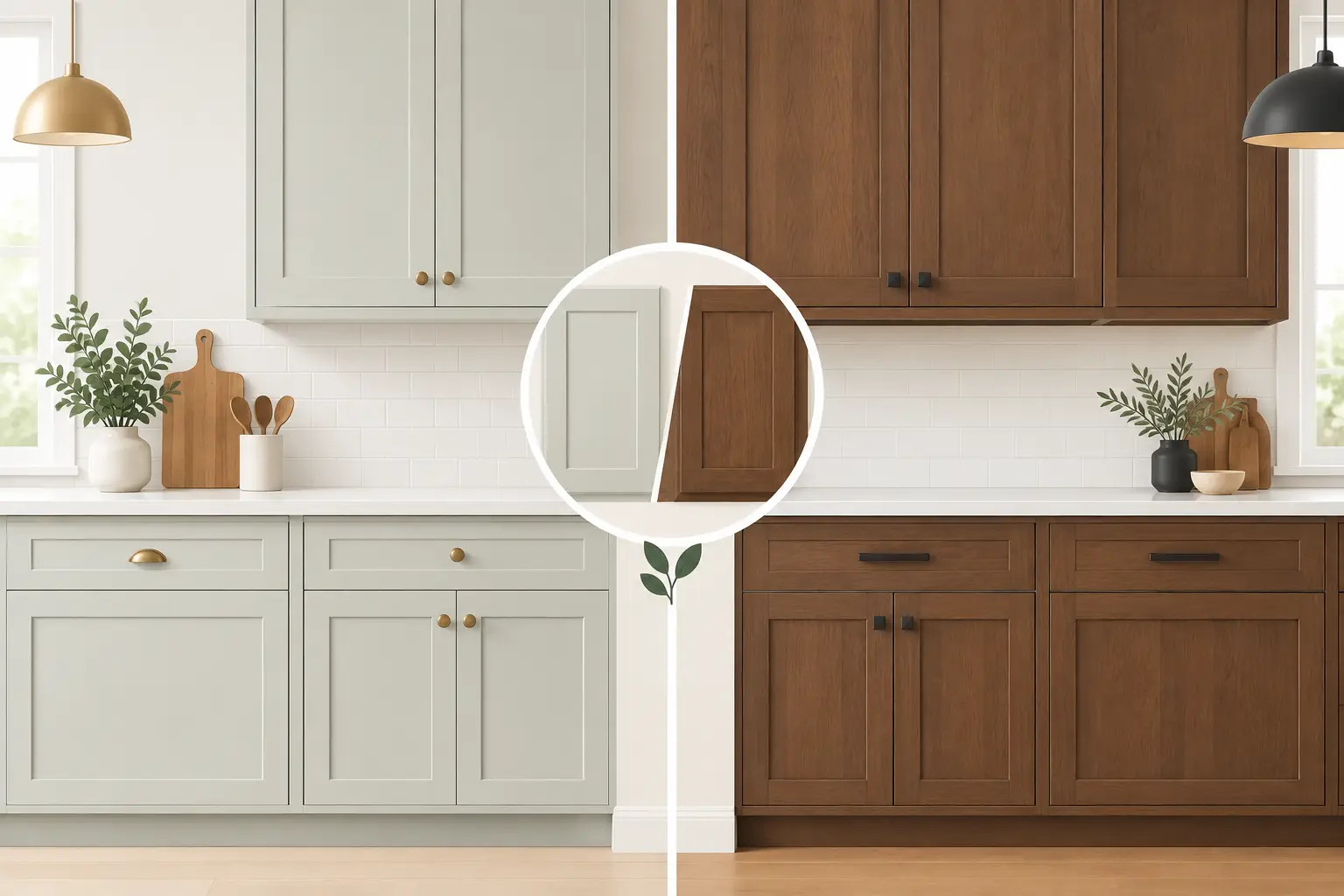
A cabinet finish can change the entire direction of a kitchen renovation. When homeowners compare painted versus stained cabinets, the choice is rarely just about whether they prefer white or wood. It affects how the kitchen works with the flooring, how easily wear shows, the level of maintenance required, and whether the finished room feels bright, traditional, modern, or somewhere in between.
For many Atlanta-area homes, the best answer comes from looking at the existing house as a whole. A light-painted kitchen may open up a dark interior, while stained cabinetry can bring needed warmth to a space with hardwood floors, brick accents, or natural light. The right finish should support the way your home looks and lives, not simply follow a trend.
Painted Versus Stained Cabinets: The Visual Difference
Painted cabinets cover the wood grain with color. White remains a popular choice because it reflects light and gives a kitchen a clean, open appearance. Soft greige, warm cream, deep blue, sage, and charcoal can also add character without making the room feel overdesigned. Paint works especially well on simple shaker doors, flat-panel doors, and kitchens where homeowners want the cabinet style and hardware to carry the visual detail.
Stained cabinets allow the grain, texture, and natural variation of the wood to remain visible. The result can range from light white oak with a relaxed, contemporary feel to rich walnut or medium brown tones that suit a more traditional home. Stain is not limited to dark, heavy-looking kitchens. Today’s lighter wood finishes can feel clean and current while still adding depth that painted cabinets cannot replicate.
The biggest visual question is whether the kitchen needs contrast or warmth. In a home with cool wall colors, stone counters, and plenty of painted trim, stained cabinets can keep the room from feeling flat. In a kitchen with busy wood flooring, a prominent wood ceiling, or strong brick features, painted cabinets may provide the visual break the room needs.
Consider the Flooring Before Choosing Cabinet Color
Cabinets and floors take up a large amount of visual space, so they should look intentional together. They do not need to match, and matching them too closely can make a kitchen feel one-dimensional. Instead, coordinate their undertones and contrast.
For example, light oak flooring can pair well with painted white or warm gray cabinets. It can also work with a deeper stained island or lower cabinets if the wood species and stain are clearly different. Dark brown floors often benefit from lighter cabinetry, whether that is a painted finish or a light natural stain. If the floor has warm red or orange undertones, test cabinet samples in the room before making a final decision. Lighting can change both finishes significantly.
Durability and Everyday Wear
Both painted and stained cabinets can perform well when the cabinets are properly built, prepared, and finished. The quality of the cabinet box, door material, sanding, primer, and topcoat matters as much as the final color.
Painted cabinets are more likely to show chips, scratches, and small dents because the finish sits on top of the material. White and light colors can also show cooking splatter, fingerprints, and grime around pulls and lower doors. That does not make them impractical. It simply means they benefit from regular gentle cleaning and timely touch-ups.
Stained cabinets tend to hide minor scratches more effectively because the color and grain are part of the visual surface. A small mark often blends into the wood better than it would on a smooth painted door. Medium stain colors are particularly forgiving in active family kitchens. Very dark stains can show dust, while very light natural finishes may show stains or discoloration over time, especially near the sink and trash pullout.
Humidity also deserves attention in Georgia homes. Wood naturally expands and contracts with seasonal moisture changes. On painted solid-wood cabinet doors, that movement can sometimes create fine lines at joints. This is a normal characteristic of wood, not always a sign of poor workmanship. Homeowners who want an ultra-smooth painted look may prefer cabinet doors made from paint-grade engineered materials in appropriate areas. For a stained finish, select a wood species with grain and character you genuinely like, because it will remain visible.
Maintenance: What Each Finish Needs
Neither option requires complicated care. Wipe cabinet fronts with a soft cloth and mild cleaner, dry spills promptly, and avoid abrasive pads or harsh chemicals. The difference is in how repairs look when life happens.
Painted cabinets are usually easier to repaint when a homeowner wants a new color years later. A qualified refinishing process can make a major visual change without replacing the cabinet layout. However, spot repairs require careful color matching, especially if sunlight and cooking residue have changed the original paint color over time.
Stained cabinets are harder to change dramatically. Moving from a medium stain to a light natural finish, for example, may require stripping, sanding, and extensive refinishing. Small scratches and worn edges, however, can often be blended more naturally than on paint. Stained cabinetry is a strong option for homeowners who value the finish they have chosen and expect to keep it for a long time.
Which Style Holds Up Best Over Time?
There is no single resale winner between painted and stained cabinets. A well-planned kitchen with durable materials, functional storage, professional installation, and a finish that suits the home will generally have more lasting appeal than a trendy kitchen with poor execution.
Painted cabinets remain a safe choice for broad appeal, particularly in smaller kitchens or homes that need more reflected light. White, off-white, warm taupe, and restrained blue-gray shades are easier for future buyers to picture living with than highly personal colors. If you choose a bold cabinet color, consider using it on an island or a smaller section rather than every cabinet.
Stained cabinets can feel more substantial and established, especially when paired with quality wood, stone, and flooring. Light oak and walnut tones have strong current appeal because they introduce warmth without the darker look associated with older traditional kitchens. They are also a practical fit for homes where natural materials are already part of the architecture.
The most timeless choice is often a balanced one. A painted perimeter with a stained island can create contrast without committing the entire kitchen to one finish. Another approach is stained lower cabinets with lighter painted uppers, though this works best in a kitchen with enough space and a clear design plan.
Budget Factors Beyond the Finish
Paint is not automatically less expensive, and stain is not automatically more expensive. Cabinet cost depends on construction, door style, wood species, finish process, hardware, modifications, and installation conditions.
Painted cabinets often use maple, poplar, MDF, or other paint-grade materials. Smooth, high-quality painted finishes require detailed prep work, primer, sanding, and controlled application. Stained cabinets require suitable wood with an attractive grain. Oak, maple, cherry, hickory, and walnut each accept stain differently, and the wood itself can raise the price.
If you are renovating an existing kitchen, cabinet condition is especially important. Solid cabinets with good layouts may be candidates for professional refinishing. Cabinets with water damage, failing boxes, outdated interior storage, or major layout problems may be better replaced as part of a larger remodel. A finish decision should come after assessing what can realistically be repaired and what should be rebuilt.
How to Make the Right Choice for Your Kitchen
Start by looking at samples in your actual space, not only in a showroom. Place painted color cards and stained wood samples beside the floor, countertop, backsplash, and wall paint. Review them during the morning, afternoon, and evening. Natural light, recessed lighting, and under-cabinet lights can all change how a finish reads.
Choose painted cabinets if your kitchen needs more brightness, you want a tailored and flexible color palette, or you prefer a cleaner contrast against wood floors and natural surfaces. Choose stained cabinets if you want visible wood character, a warmer finish, and a surface that can be more forgiving of minor daily wear.
For a connected renovation, the cabinet decision should also account for adjacent rooms. A kitchen that opens to a living room, dining area, deck, or porch benefits from coordinated finishes. Floor's Leader approaches kitchen, flooring, and home upgrades with that full-room view, helping homeowners avoid choices that look good in isolation but compete once the project is complete.
A cabinet finish should make everyday use easier and make the room feel right when you walk in. Whether that means crisp painted doors, natural wood grain, or a thoughtful mix of both, the strongest result is the one that fits your home instead of asking your home to fit a passing trend.
Get a free quote from Floor's Leader.