
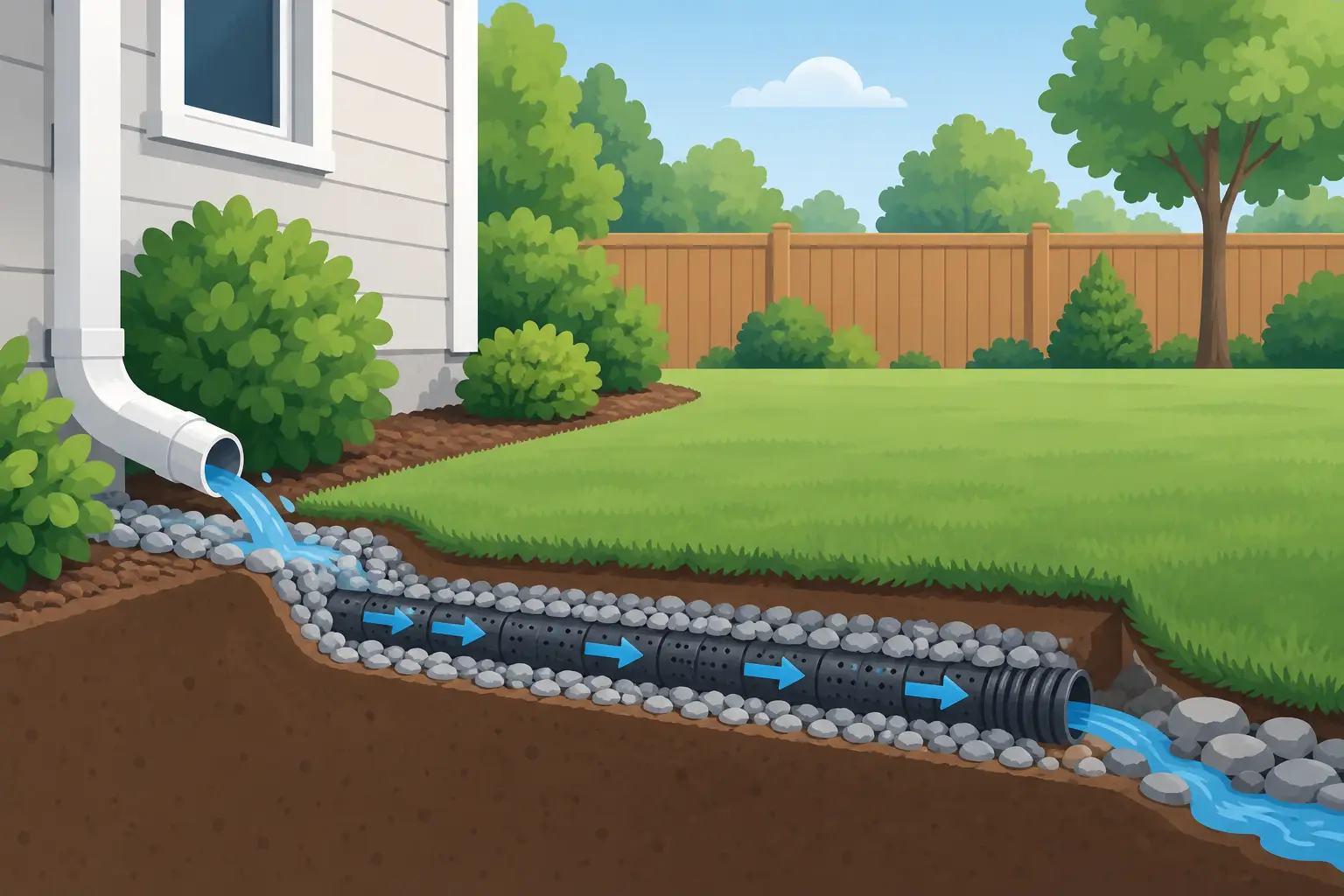
A backyard can look finished on a sunny day and still have a serious water problem. Standing water near a patio, soggy grass below a deck, mulch washing out of beds, or water moving toward the foundation are all signs that the yard is not directing rainfall where it needs to go. Knowing how to improve backyard drainage starts with finding where the water enters, where it collects, and where it can safely exit.
For Atlanta-area homeowners, this is more than a cosmetic concern. Heavy rain, dense clay soil, mature landscaping, and older drainage layouts can turn a small low spot into a recurring problem. The right solution protects the house, preserves outdoor improvements, and makes the backyard usable after a storm.
Start by Following the Water
Do not choose a drain or order gravel before identifying the source of the problem. Walk the property during a steady rain if it is safe to do so, then walk it again after the rain stops. Look for roof runoff, slopes that point toward the home, puddles at the bottom of a grade, and water trapped between the house, fence, patio, or retaining wall.
Pay attention to timing. Water that appears immediately during rainfall often comes from roof runoff, hard surfaces, or a neighboring slope. Water that remains for a day or more may point to compacted soil, clay-heavy ground, poor grading, or a lack of an outlet. These conditions can overlap, which is why a drainage plan should address the whole path of the water instead of one wet patch alone.
A simple test can help. After a dry period, dig a small hole in the problem area, fill it with water, and watch how quickly it drains. Slow infiltration does not automatically mean the yard needs an expensive underground system, but it does mean surface water cannot be expected to disappear on its own.
Improve Backyard Drainage With Proper Grading
Grading is often the most effective and least visible drainage improvement. The goal is to create a gentle slope that carries water away from the foundation and toward a suitable discharge area. Around the home, the ground should generally fall away from the structure rather than forming a shallow bowl against it.
This work can involve adding and compacting soil, reshaping planting beds, adjusting lawn areas, or correcting a patio edge that holds water. It is not simply a matter of spreading topsoil over a low spot. Added soil can create problems if it covers siding, interferes with door thresholds, blocks vents, or changes how water reaches a neighboring property.
Clay soil is common around Atlanta, and it changes the equation. Clay can be stable and useful for shaping grade, but it drains slowly. A surface that appears level may hold water because the soil beneath it is compacted. In some cases, a graded surface combined with improved topsoil and carefully selected planting is enough. In others, the water needs a defined collection system below grade.
Get Roof Runoff Away From the House
Downspouts are a frequent cause of backyard drainage issues because they concentrate a large volume of water in one place. A roof can shed hundreds of gallons during a strong storm. If that flow ends beside the foundation or at the top of a slope, it can erode soil, saturate beds, and feed standing water in the yard.
Start by checking that gutters are clean, securely attached, and properly pitched toward the downspouts. Then extend each downspout so water discharges well away from the foundation. Above-ground extensions can work in straightforward locations, particularly where there is a clear slope away from the house. They are affordable and easy to inspect, although they can be visible and may interfere with mowing or foot traffic.
For a cleaner finished appearance, downspouts can connect to buried solid pipe that carries roof water to a safe outlet. The outlet matters as much as the pipe. Water cannot simply be sent to the edge of the property without considering grade, erosion, utility locations, local requirements, and adjacent lots. A well-designed runoff path releases water where it can spread and drain without causing a new problem.
Choose the Right Drainage System for the Yard
There is no single backyard drain that works for every property. The best option depends on whether water is moving across the surface, collecting at one low point, coming from a roof, or building pressure behind a structure.
A French drain is useful when groundwater or water moving through soil needs to be intercepted. It typically uses a perforated pipe surrounded by washed stone and filter fabric. The pipe collects water and directs it toward an outlet. French drains are effective when properly designed, but they are not a fix for poor surface grading. If a yard is shaped to funnel every storm toward one area, the drain may become overloaded.
A catch basin works best where water collects on the surface, such as at the bottom of a patio slope, near a driveway edge, or in a lawn depression. Water enters through a grated box and moves through solid pipe to an outlet. Because catch basins receive leaves, mulch, and sediment, they need occasional cleaning. Their advantage is direct collection during heavy rain.
Channel drains are often installed along the edge of patios, pool decks, walkways, or garage entrances. Their long, narrow grates collect sheet flow before it reaches a door, slab, or finished outdoor area. These systems must be set at the correct elevation and connected to a reliable discharge path.
Swales are shallow, broad channels shaped into the landscape. They guide water gradually across a yard without the appearance of a conventional drain. A swale can be a smart choice for larger backyards with room to reshape the terrain, especially when paired with turf, groundcover, or water-tolerant plants. It may not be suitable for a tight side yard or a location where water needs to cross beneath a hardscape surface.
Protect Decks, Patios, and Landscape Improvements
Drainage should be planned before building or renovating exterior features. Water that remains beneath a deck can create muddy conditions, encourage mosquitoes, and shorten the life of framing materials. Water flowing against a patio can stain the surface, wash out joint material, or contribute to settlement over time.
Before adding a deck, porch, paver patio, or backyard seating area, confirm how existing runoff will move around it. A new structure can interrupt a natural drainage path. Sometimes the answer is a simple grading adjustment; other times it requires a drain, pipe crossing, or gravel zone beneath the finished surface.
Landscape choices also affect drainage. Thick mulch can slow erosion, but it should not be piled high against the house or used to hide a low area that still collects water. Decorative rock can manage splash and define a runoff path, though it does not solve drainage by itself. Deep-rooted plants can help improve soil structure over time, while water-loving plants can make a seasonally damp area look intentional rather than neglected.
Avoid Fixes That Create Bigger Problems
Many drainage issues get worse because of quick fixes that treat the symptom. Filling a low spot without correcting the outlet can push water toward the house or neighboring yard. Adding more mulch may conceal mud but will not improve grade. Installing a perforated pipe without stone, fabric, slope, or a place for the water to exit can leave the system clogged or ineffective.
Be cautious about directing runoff across property lines. In addition to creating conflict with neighbors, it can violate local rules and cause erosion elsewhere. Underground work also requires planning around utilities, irrigation lines, tree roots, and future construction. A drainage system should fit the property as it exists and the outdoor improvements planned for later.
When Professional Drainage Work Makes Sense
A homeowner can often handle gutter cleaning, basic downspout extensions, and small landscape adjustments. Professional assessment is worthwhile when water reaches the foundation, enters a crawl space or basement, undermines hardscape, repeatedly kills lawn areas, or remains standing long after rain.
It is also a good idea when drainage work connects to a larger exterior project. Coordinating grade, drainage, deck construction, patios, and landscaping before surfaces are installed prevents costly rework. Floor's Leader INC approaches backyard improvements with that broader project view, so outdoor spaces can be built to look finished and manage water properly.
The best drainage solution is the one that matches the source of the water, the shape of the property, and the way the backyard will be used. Address the water path early, and every improvement that follows has a stronger foundation.
Get a free quote from Floor's Leader.