
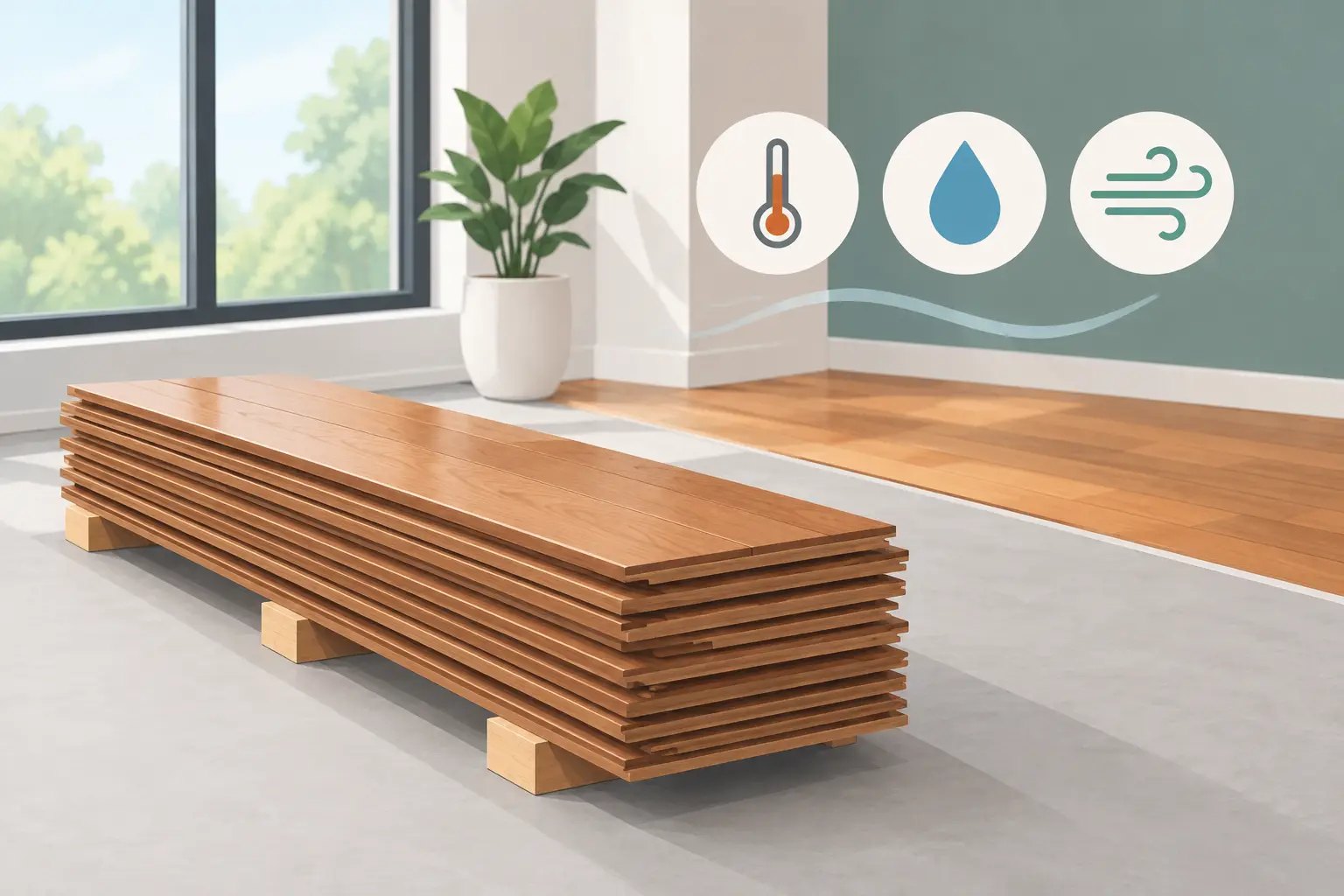
A new hardwood floor can look perfect on installation day and still develop gaps, cupping, or raised edges weeks later. The difference often comes down to conditions that were handled before the first board was installed. This guide to hardwood acclimation explains what homeowners need to know before a flooring project begins, especially in Georgia homes where heat, humidity, and air conditioning can change indoor moisture levels quickly.
Hardwood is a natural material. It takes on and releases moisture from the surrounding air, which causes it to expand or contract. Acclimation gives the flooring time to reach a moisture level that is appropriate for the home where it will be installed. It is not a delay for delay's sake. It is part of protecting the fit, finish, and long-term appearance of the floor.
What hardwood acclimation actually means
Acclimation is the process of bringing hardwood flooring into a controlled, lived-in home environment before installation so the wood can adjust to that environment. The goal is not simply to leave boxes of flooring in a room for a set number of days. The goal is to confirm that the flooring's moisture content is compatible with the subfloor and the expected indoor conditions.
That distinction matters. A stack of unopened flooring cartons sitting in an unconditioned garage is not acclimating correctly. Neither is flooring brought into a house that still has wet drywall work, fresh concrete, open windows, or an HVAC system that is not operating normally.
A professional installation starts by treating the project site like the finished home it will become. Indoor temperature and relative humidity should be stabilized, and the home should be closed in and protected from outside weather. The wood is then stored inside the installation area or another conditioned space according to the flooring manufacturer's instructions.
Why acclimation matters in Georgia homes
Metro Atlanta weather creates a real challenge for wood flooring. Summer humidity can be high, while air conditioning can lower indoor humidity significantly. Winter heating can dry the indoor air. A floor installed when the wood is unusually damp or unusually dry may move noticeably once normal household conditions return.
If boards are installed with excess moisture, they can expand after installation and create pressure between rows. That pressure may lead to cupping, crowning, or boards lifting at the edges. If flooring is installed too dry for the home, the boards can shrink later and leave visible gaps.
Not every small seasonal gap is a failed floor. Hardwood moves to some degree because it is wood. The objective is to limit excessive movement by matching the flooring, subfloor, and home conditions as closely as possible before installation.
This is particularly relevant when a flooring project is part of a broader renovation. Kitchen updates, wall removal, painting, plumbing changes, and exterior repairs can all affect indoor moisture and temperature. Flooring should be scheduled after moisture-producing work is complete and after the home has returned to stable conditions.
The conditions that should be ready first
Before hardwood arrives, the home should be weather-tight. Doors, windows, roofing, and exterior walls should be complete enough to keep rain and humid outdoor air from affecting the project area. The permanent heating and cooling system should be operating under normal living conditions, not just turned on the day before flooring is delivered.
Wet work should also be finished and dry. This includes concrete work, drywall finishing, plaster, paint, masonry, and any repair that introduces substantial moisture into the house. A newly painted room may feel dry to the touch while the indoor air is still carrying extra moisture. Time and proper ventilation matter.
The subfloor needs equal attention. Wood subfloors must be dry, secure, flat, and clean. Concrete slabs need appropriate moisture testing and, when required, a compatible moisture-control system. Hardwood installed over a damp subfloor is at risk even if the boards themselves were acclimated correctly.
A guide to hardwood acclimation: what the installer checks
A reliable process is based on measurement, not guesswork. The installer uses a moisture meter to test the hardwood flooring and the subfloor. Those readings help determine whether the wood has adjusted sufficiently and whether the difference between the flooring and subfloor is within an acceptable range for the product and installation method.
The specific moisture target depends on several factors: solid or engineered hardwood, wood species, plank width, subfloor type, installation method, the manufacturer's requirements, and the home's normal humidity range. That is why a universal rule such as "acclimate for three days" is not dependable.
Some products may be ready after a short period in a properly conditioned home. Others, especially solid wide-plank flooring or material coming from a substantially different climate, may need more time. Engineered hardwood is generally more dimensionally stable than solid hardwood, but it still requires correct job-site conditions and moisture checks.
The manufacturer instructions always matter. They may specify how cartons should be opened, how material should be stacked, required temperature and humidity ranges, and moisture-testing limits. Following those requirements helps protect both the floor and the product warranty.
How flooring should be stored during acclimation
Hardwood should be brought into the conditioned home, not left in a garage, basement, covered porch, or delivery truck. It should be kept away from exterior doors, direct sunlight, active HVAC vents, and areas where leaks or construction traffic could damage it.
The material should be stored flat and supported so boards do not bend or take on uneven moisture. Depending on product instructions, cartons may remain closed or be opened and spaced to allow air circulation. Opening every box automatically is not always correct. Some manufacturers want cartons intact until installation, while others require boards to be distributed or racked.
Homeowners can help by avoiding abrupt changes during this stage. Do not shut off the HVAC to save energy, open windows for extended periods, or run humidifiers and dehumidifiers aggressively unless a flooring professional recommends it. The aim is ordinary, stable indoor conditions - the same conditions the floor will experience after the project is complete.
Acclimation is not a fix for moisture problems
One of the most common misunderstandings is that extra acclimation can solve any moisture issue. It cannot. If water is entering through a crawl space, slab, plumbing leak, exterior door, or unfinished basement, the source must be corrected before installation.
Likewise, a floor cannot be protected by acclimation alone if the wrong product is selected for the room. Solid hardwood is usually not the best choice for below-grade spaces or areas with ongoing moisture exposure. Engineered hardwood may be a better fit in certain locations, but the subfloor and moisture-control plan still have to be right.
A careful contractor will pause a project when site readings show a problem. That can feel inconvenient when a renovation schedule is moving, but installing over excess moisture creates a more expensive problem later. Waiting for stable conditions is usually the better result.
What homeowners can do before installation day
Homeowners do not need to manage moisture readings themselves, but a few practical steps can keep the project on track. Keep the home secured and conditioned. Let the contractor know about recent leaks, foundation repairs, HVAC issues, or rooms that have felt damp. If a remodel includes new drywall, paint, cabinets, or appliances with water connections, share the schedule so flooring is installed at the right stage.
It also helps to plan furniture moves and room access before the wood arrives. Flooring needs a protected place to acclimate, and crews need clear access to test the site and complete installation without repeatedly moving material through changing conditions.
For homes in Marietta, Atlanta, Roswell, Acworth, Canton, and nearby areas, seasonal timing can affect the schedule, but it should not force a rushed installation. A well-managed hardwood project accounts for the home's actual conditions rather than relying on the calendar alone.
After the floor is installed
The same stable environment that supports acclimation should continue after installation. Maintain reasonable indoor temperature and humidity throughout the year. Clean spills promptly, use mats at exterior doors, and avoid wet-mopping a hardwood floor. These habits will not stop all natural seasonal movement, but they reduce the stress that can shorten the life of the finish and flooring system.
Hardwood acclimation happens before installation, but the result is visible long after the crew leaves. Giving the material and the home time to match is one of the clearest ways to protect the clean, finished look that made hardwood the right choice in the first place.
Get a free quote from Floor's Leader.