
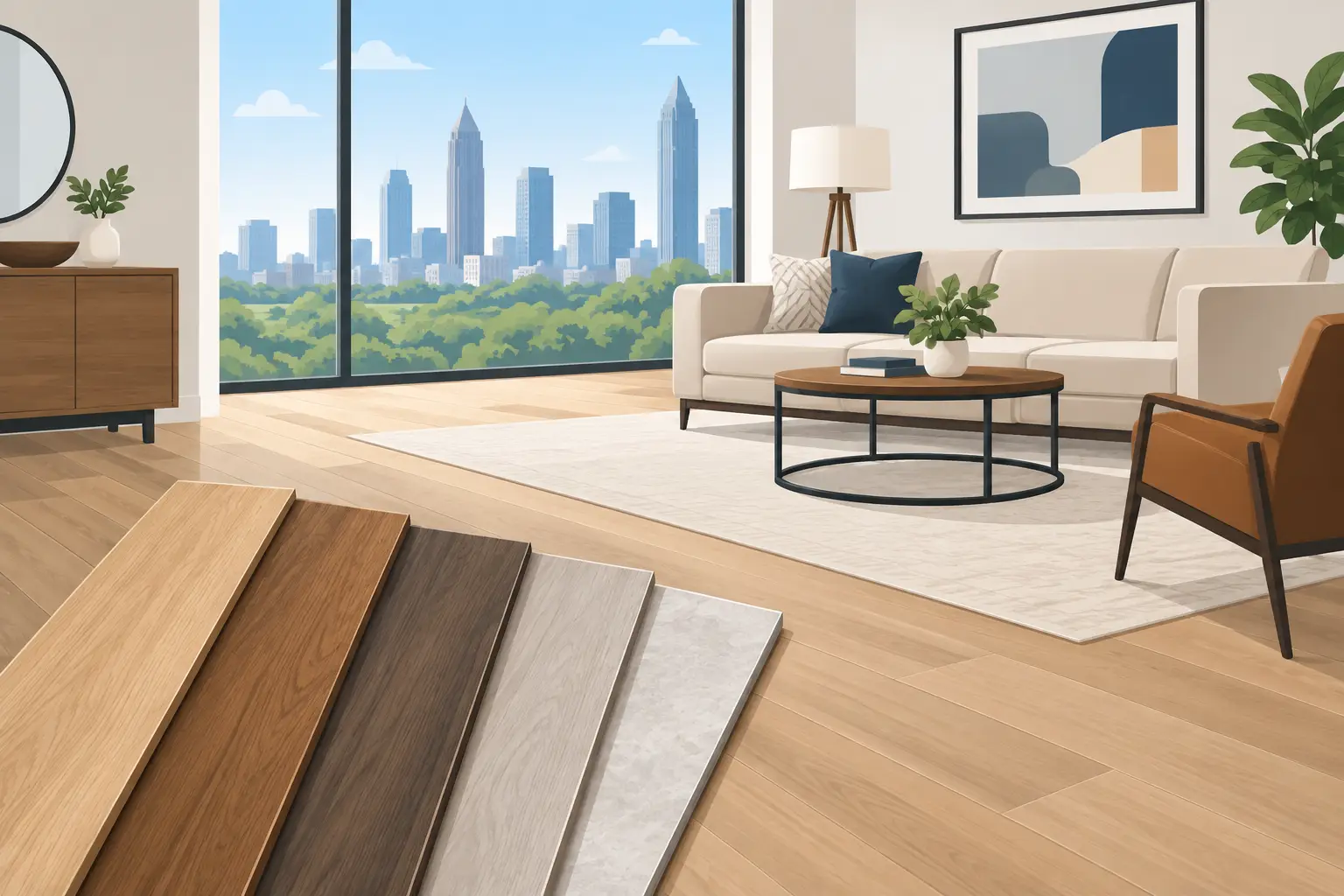
A new floor changes more than the room beneath your feet. It changes how light moves through the house, how adjoining spaces relate to one another, and how finished a kitchen or remodel feels. The most useful flooring trends are not about chasing a look for one season. They help Atlanta-area homeowners choose materials and finishes that support daily life, hold up over time, and work with the rest of the home.
Flooring Trends That Are Built to Last
The strongest direction in flooring is toward warm, natural-looking finishes with enough character to feel lived-in, not overly styled. Homeowners are moving away from very cool gray floors and highly glossy surfaces that show every scratch, footprint, and streak of sunlight.
Instead, medium browns, soft natural oak, honey tones, and gentle greige finishes are showing up in more renovations. These colors give a room warmth without making it dark. They also work well with a wider range of cabinet colors, furniture, stone, and paint choices, which matters if your project includes more than one room.
A trend is only useful if it fits the house. A bright natural oak can make a smaller home feel more open, while a deeper brown may bring needed contrast to a large room with light walls and pale cabinetry. The goal is not to select the most popular stain sample. It is to select a finish that looks right in your home throughout the day.
Wider planks, quieter patterns
Wide-plank flooring remains a practical choice for homeowners who want a clean, updated look. Fewer seams can make rooms feel broader and less busy, especially in open living areas. Planks in the 5- to 8-inch range are common choices, but the right width depends on the room scale, the product, and the subfloor conditions.
Longer boards are also popular because they create a more continuous visual line. That does not mean every project needs the widest or longest boards available. Very wide planks can show seasonal movement more clearly if humidity is not controlled, and installation quality matters even more. A professional evaluation should guide the final product choice.
At the same time, homeowners are choosing simpler layouts for large areas. Straight-laid planks keep the focus on the material and make it easier to connect a living room, hallway, dining area, and kitchen. Herringbone and other patterned installations still have a place, particularly in entryways, dining rooms, and smaller defined spaces where a custom detail can stand out without overwhelming the home.
Hardwood Remains the Anchor for Main Living Spaces
Hardwood continues to be a leading choice because it combines appearance, repairability, and long-term value. It can be refinished when the finish wears down or when a homeowner wants a different color years later. That flexibility is hard to match with many other flooring types.
For homes in Marietta, Roswell, Acworth, Canton, and the surrounding area, hardwood often makes the most sense in living rooms, dining rooms, bedrooms, hallways, and main-level spaces where visual continuity matters. It creates a finished foundation for a renovation and can carry naturally into a kitchen when the product and protective finish are selected with real household use in mind.
White oak is especially popular for its grain pattern and ability to accept a broad range of stain colors. Red oak still has a place, particularly when matching existing floors or working within a renovation budget. Neither is automatically better. Species, grade, plank width, finish, and installation method all affect the final result.
Matte and low-sheen finishes win on everyday maintenance
A low-sheen finish is one of the most practical choices in current flooring design. It has a natural appearance and is generally more forgiving than a glossy surface when it comes to dust, small scratches, and daily traffic. That makes it a strong option for active households, families with pets, and homes with large windows.
Low sheen does not mean low protection. Modern finish systems can provide solid wear resistance while keeping the floor from looking plastic or overly reflective. The right maintenance routine still matters: use furniture pads, clean up water promptly, and avoid harsh cleaners that leave residue or damage the finish.
Durable Alternatives Have a Clear Role
Not every room needs hardwood, and a coordinated renovation often works best when different materials are used for different conditions. Luxury vinyl plank, engineered hardwood, and tile each solve specific problems.
Engineered hardwood can be a good fit when a homeowner wants the look and feel of real wood but needs greater dimensional stability. It is often considered for areas where installation conditions make solid hardwood less practical. The quality of the wear layer, core construction, and installation preparation makes a significant difference, so products should not be compared by appearance alone.
Luxury vinyl plank has become a common choice for laundry rooms, basements, and other areas where water resistance and easy cleanup are priorities. It offers many convincing wood-look options and can be comfortable underfoot. The trade-off is that it does not offer the same refinishing potential or long-term character as real wood. It is a functional choice, not a direct replacement for hardwood in every room.
Tile continues to be a dependable answer for bathrooms, mudrooms, and entries. Larger-format tile and quieter stone-look patterns can reduce visual clutter, while textured surfaces improve traction. For exterior-adjacent spaces, the material must be chosen for its specific location and exposure, not just its color.
One Floor Should Support the Whole Renovation
Many homeowners start with flooring because an aging surface is impossible to ignore. Once the old floor is removed, however, it often becomes clear that baseboards, paint, transitions, cabinets, lighting, or adjoining rooms also need attention. This is where planning the project as a connected renovation pays off.
Floor color affects cabinet selection. Cabinet color affects countertop and backsplash choices. Door trim, stair parts, and deck access points all influence whether the completed home feels coordinated. A good flooring plan accounts for these connections before materials are ordered.
For example, if you are updating a kitchen and installing hardwood in nearby living areas, decide early whether the flooring will continue under the kitchen footprint or stop at a planned cabinet line. If a new deck or porch door is part of the project, consider threshold height, flooring direction, and how the indoor finish relates to the exterior transition. These details are easier and less expensive to address before installation begins.
Transitions deserve more attention than they get
A clean transition is a sign of careful planning. When flooring changes at a bathroom, laundry room, entry, or remodeled kitchen, the goal is to create a purposeful connection rather than an abrupt break. Matching heights where possible helps reduce trip hazards and improves the appearance of the finished space.
Material changes can also define function. Hardwood flowing through the main living area can meet tile at a mudroom, for instance, where moisture and dirt are expected. The key is keeping the colors and undertones compatible so the shift feels intentional.
Choose for Your Household, Not a Sample Board
Before settling on a flooring trend, think through how the house is actually used. Dogs, children, frequent guests, direct sun, open exterior doors, and heavy furniture all affect the right choice. A pale floor may show less dust but can reveal dark scuffs. A dark floor can feel rich but may show pet hair and scratches more readily. Highly textured surfaces can hide wear, but they may be harder to clean depending on the finish.
Bring samples into the home and view them in morning light, afternoon light, and artificial light. Place them next to cabinets, wall colors, and furniture when possible. A showroom sample is useful, but it cannot show how a color will respond to your home's lighting.
Professional installation also protects the investment. Proper subfloor preparation, moisture testing, layout planning, expansion space, and finish work influence how a floor performs long after the project is complete. The material is only one part of the result.
The best flooring choice is the one that still looks right after the furniture is back in place, the kitchen is in use, and the home is being lived in every day. Start with the function you need, choose a finish with staying power, and let the rest of the renovation build around it.
Get a free quote from Floor's Leader.