
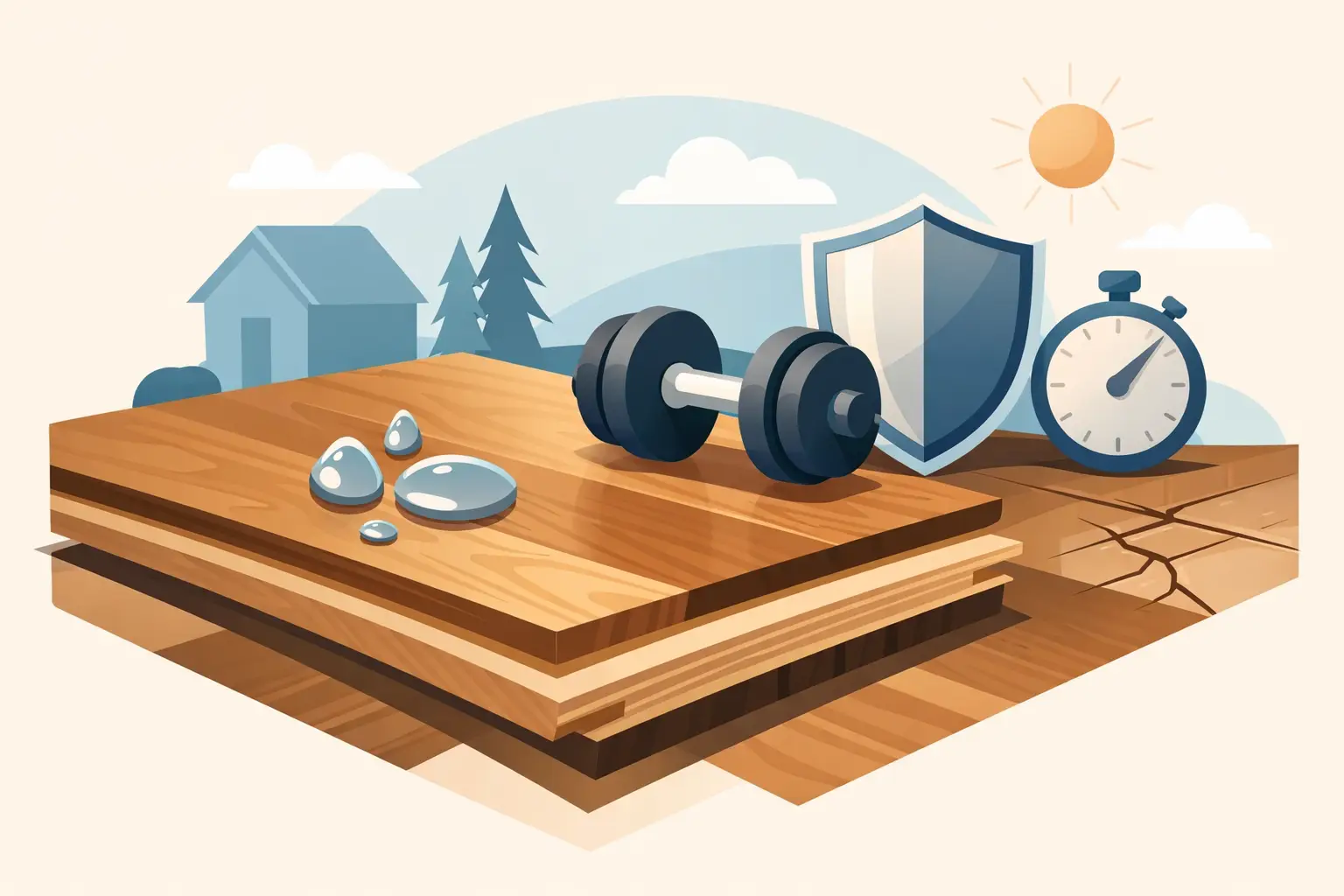
A beautiful floor has to do more than look good on installation day. It has to handle morning routines, pets racing through the hallway, chair legs at the table, humidity shifts, and the occasional spill. Engineered hardwood durability comes down to how the product is built, where it is installed, and how well the installation is handled from the start.
For Atlanta homeowners, that last point matters. Our climate brings humid summers, changing indoor conditions, and moisture concerns in lower-level spaces. Engineered hardwood can be an excellent choice for a renovation, but not every board is built for the same level of traffic or long-term wear.
What Makes Engineered Hardwood Durable?
Engineered hardwood is real wood flooring. Its top layer, called the wear layer or veneer, is genuine hardwood. Beneath it sits a layered core, usually made from plywood or other wood-based material arranged in alternating directions for stability.
That construction is the main advantage over solid hardwood in many homes. Solid boards expand and contract more noticeably as humidity changes. Quality engineered flooring is designed to manage those changes better, making it a practical option for rooms where solid hardwood may need more caution.
Still, “engineered” does not automatically mean “durable.” Products vary widely. A well-made engineered floor with a thick hardwood veneer and a stable multi-ply core can perform for decades. A low-cost product with a thin veneer and weaker core may show wear much sooner, especially in a busy household.
The Wear Layer Sets the Refinishing Potential
The wear layer is the part of the floor you see and walk on. Its thickness affects how much future repair or refinishing is possible after scratches, fading, and surface wear build up.
Thin veneers are often suitable for lower-traffic areas or budget-focused updates, but they leave little room for sanding later. Thicker wear layers offer more long-term value because they can typically be refinished at least once, and sometimes more depending on the product and the condition of the floor.
This does not mean every homeowner needs the thickest veneer available. In a guest room or formal dining room, a moderate wear layer may be completely appropriate. In a main living area, kitchen-adjacent space, or home with active children and large dogs, investing in more surface thickness is usually the wiser move.
Core Construction Affects Stability
The layers below the veneer matter just as much as the surface. Better engineered flooring typically uses multiple layers of plywood, with each layer positioned in a different direction. This cross-layered construction helps reduce movement caused by seasonal humidity changes.
A stable core helps boards stay flatter and reduces the risk of gaps, cupping, or edge lifting when conditions change. It is particularly helpful in Atlanta-area homes where air conditioning, heating, and outdoor humidity can create a wide range of indoor moisture levels throughout the year.
Not all cores perform equally. Some engineered products use high-density fiberboard or less substantial construction. These may work in the right setting, but homeowners should understand the trade-off before choosing based only on color or price.
Engineered Hardwood Durability in Real Homes
A flooring sample in a showroom cannot show how a finish will look after three years of daily use. When evaluating engineered hardwood durability, think about how each room functions rather than treating the entire house the same.
Entry areas, living rooms, hallways, kitchens, and rooms that connect to decks or patios tend to see the most grit, moisture, and foot traffic. Fine sand and debris act like sandpaper under shoes, gradually dulling the finish. Pets can leave surface scratches, especially on darker floors with a smooth, glossy sheen.
Bedrooms and upstairs spaces often have different demands. They may still need a durable floor, but the finish and species selection can be driven more by appearance than maximum impact resistance.
Wood species also plays a role. Oak remains a popular choice because it offers a good balance of hardness, grain character, and repairability. Hickory is harder and can be a strong fit for active homes, though its natural variation creates a more pronounced look. Softer species can be attractive, but homeowners should expect dents and marks to become part of the floor’s character over time.
Finish Matters More Than Many Homeowners Expect
The factory finish is the first line of defense against everyday wear. A quality finish helps resist surface scratches, stains, and fading, but no finish makes a wood floor indestructible.
Matte and low-sheen finishes are often practical for family homes because they hide small scratches, dust, and footprints better than high-gloss options. Wire-brushed and textured surfaces can also disguise everyday wear more effectively than a perfectly smooth floor. Those choices do not prevent damage, but they make normal life less visible between cleanings.
Color deserves the same level of thought. Very dark floors can show dust, pet hair, and scratches quickly. Extremely light floors may show dirt around exterior doors. Mid-tone colors and natural wood variation are often more forgiving, especially in high-use areas.
Installation Has a Major Impact on Floor Life
A quality product can still fail if it is installed over an unprepared subfloor or in a home with unmanaged moisture. Flooring installation is not just about getting boards straight. It begins with checking the condition of the space.
The subfloor needs to be clean, dry, level, and structurally sound. High spots, low areas, loose sections, or moisture concerns should be addressed before flooring goes down. Skipping this work can lead to movement, hollow sounds, squeaks, gaps, or premature wear at the board edges.
Engineered hardwood can be glued down, nailed or stapled down, or installed as a floating floor, depending on the product and the conditions. Each method has a proper use. Glue-down installation can provide a solid feel underfoot and is common over concrete when the flooring system is approved for it. Nail-down methods are often used over suitable wood subfloors. Floating floors may be practical in certain applications, but they can feel and sound different from a fully adhered floor.
A professional installer also considers expansion space around walls and fixed objects, transition details between rooms, and the relationship between the new floor and nearby kitchen cabinets, exterior doors, stairs, and existing finishes. These details are where a flooring project starts to look connected to the rest of the home rather than pieced together.
Moisture Is the Biggest Risk to Manage
Engineered flooring handles normal humidity changes better than solid hardwood, but it is not waterproof. Standing water, repeated wet mopping, plumbing leaks, and moisture rising through a slab can still cause lasting damage.
This is why the product choice and preparation need to match the location. A properly rated engineered floor may be a good solution for a finished lower level or a concrete slab, provided moisture testing and installation requirements are followed. It is generally not the right choice for a full bathroom where frequent water exposure is expected.
In kitchens, engineered hardwood can work well when homeowners clean spills promptly and use rugs or mats in sensible locations. Avoid mats with rubber or non-breathable backings that can trap moisture against the floor. At exterior doors, use a good-quality mat to catch grit before it gets carried across the boards.
Maintaining steady indoor humidity also helps. You do not need to treat your home like a museum, but consistently extreme dry or humid conditions put unnecessary stress on any wood floor.
Simple Habits That Protect the Finish
Most engineered hardwood floors do not need complicated maintenance. Regular dry cleaning with a microfiber mop or vacuum approved for hard surfaces removes the grit that causes surface wear. For deeper cleaning, use a wood-floor cleaner recommended for the specific finish and use only a lightly damp mop.
Avoid steam mops, soaking wet mops, abrasive pads, and household cleaners that leave residue. Felt pads under furniture legs, prompt spill cleanup, and care when moving heavy furniture prevent many of the marks homeowners assume are unavoidable.
If damage does occur, the right repair depends on the issue. Small surface scratches may be improved with a manufacturer-approved touch-up product. Deeper gouges, damaged boards, or moisture-related movement need a closer evaluation. Trying to sand or refinish a thin-veneer floor without knowing its construction can create a larger problem.
Is Engineered Hardwood the Right Long-Term Choice?
For many Atlanta renovations, engineered hardwood offers a strong balance of real-wood appearance, stability, and practical performance. It can be especially useful when a home has concrete subfloors, lower-level rooms, wider-plank design goals, or humidity considerations that make solid wood less convenient.
The trade-off is that engineered hardwood has a more limited refinishing life than traditional solid hardwood. If your main priority is sanding and refinishing the same floor several times over many decades, thick solid hardwood may still be the better fit. If you want the warmth of real wood with dependable performance in a well-planned renovation, a quality engineered product is often the better match.
The best result comes from selecting the floor around your household, not around a sample board alone. Choose a wear layer, finish, installation method, and room-by-room plan that fit how your family actually uses the house. That approach gives the finished floor a better chance to keep working hard long after the renovation is complete.
Get a free quote from Floor's Leader.