
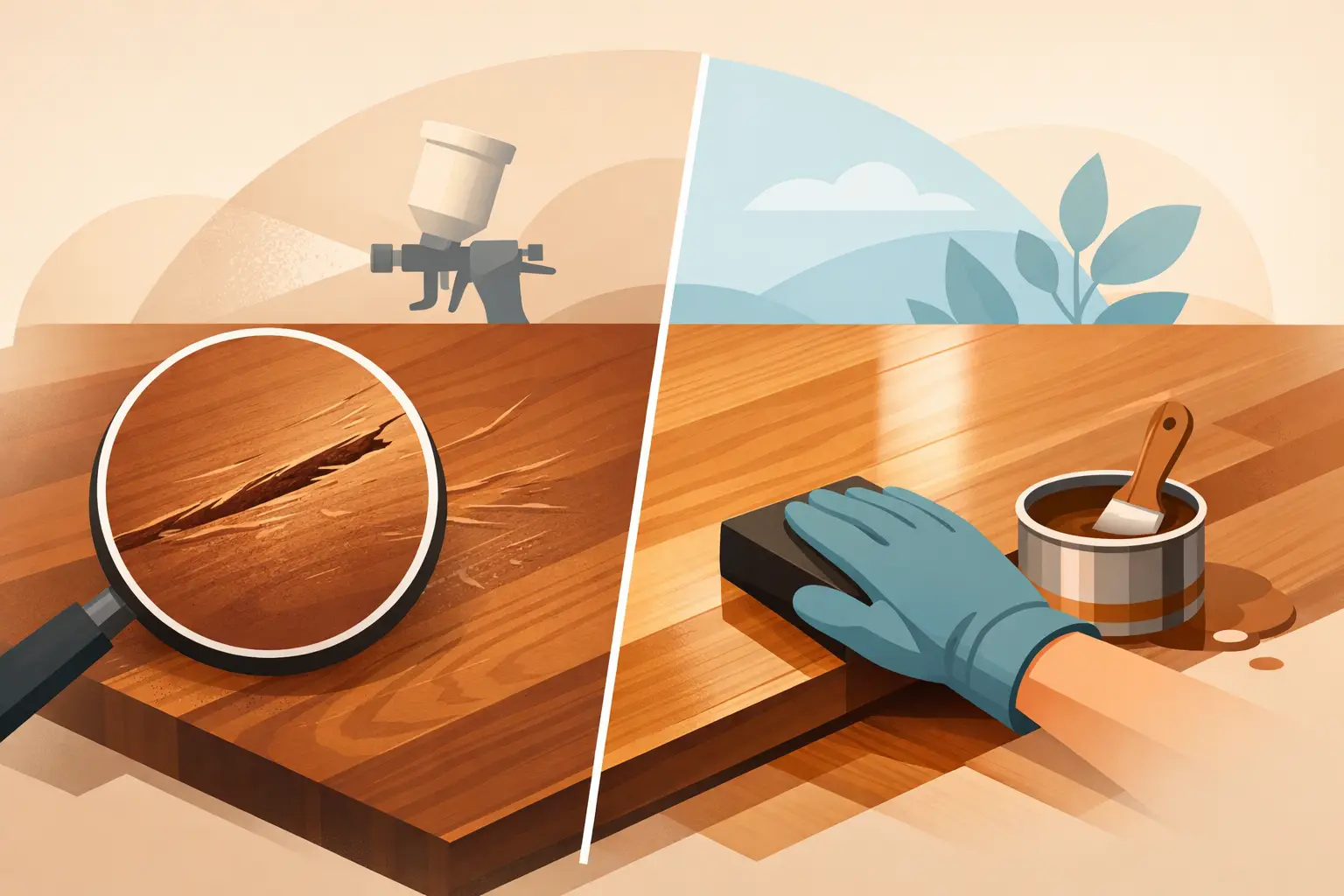
A dragged appliance, an excited dog, or years of furniture movement can leave a hardwood floor with scratches that catch the light from every angle. So, does refinishing remove deep scratches? Often, yes - but only when the damage has not gone farther into the wood than a professional sanding process can safely remove.
For Atlanta homeowners, the right answer depends on the floor itself: whether it is solid or engineered hardwood, how much usable wood remains, and whether the scratch is truly a surface issue or a damaged board. Refinishing can create a dramatic before-and-after result, but it is not a cure for every gouge, split, stain, or moisture problem.
Does Refinishing Remove Deep Scratches From Hardwood?
Hardwood refinishing removes scratches by sanding away a thin layer of the existing finish and wood surface, then applying new stain and protective finish. Light scratches that only affect the finish usually disappear completely. Scratches that have cut into bare wood can also be removed if they are shallow enough for sanding to level the surrounding area.
The challenge is depth. A scratch that feels deep under a fingernail may still be repairable through refinishing, but it needs a closer look. Sanding must lower the entire area around the scratch until the damaged line is no longer visible. Removing too much material can weaken the floor, change the profile of the boards, or expose the tongue-and-groove edges.
A professional inspection looks beyond the scratch itself. The contractor checks the thickness of the wood, prior sanding history, board movement, finish condition, and the location of the damage. A deep mark in the middle of a wide plank has different repair options than one running along the edge of a board or beside a doorway.
Surface Scratches vs. Wood Damage
The easiest scratches to fix are in the clear protective coating. They may look white, hazy, or dull, especially in direct sunlight, but they have not reached the stain or wood beneath. Depending on the floor condition, these can sometimes be handled with a screen-and-recoat service instead of a full refinish.
Scratches that reveal lighter raw wood have gone through the finish and stain. Full refinishing usually provides the most consistent result because the floor is sanded, stained evenly if needed, and sealed as one continuous surface.
Deep gouges are different. If a scratch has compressed, torn, or removed wood fibers, sanding may reduce it without making it disappear. The deeper the gouge, the more surrounding wood must be removed to level it. At some point, board repair or replacement is the better solution.
When Sanding Is Not the Best Repair
Refinishing works best when the floor is structurally sound and the damage is spread across the surface. It is less effective when a small number of boards have severe localized damage. In those cases, trying to sand every mark away can take too much material off the entire floor.
A board may need repair or replacement before refinishing if it has a deep chip, a crack that follows the grain, water damage, raised edges, pet stains that have soaked into the wood, or a gouge near the board joint. Replacement boards can then be blended into the surrounding floor during the staining and finishing process.
Matching replacement wood is not always simple. Species, grain pattern, board width, age, and sun exposure all affect color. A full-floor refinish gives the best chance of making repaired sections look intentional rather than patched. Even then, natural variation is part of a real hardwood floor, especially in older Atlanta homes.
Deep Scratches in Engineered Hardwood
Engineered hardwood requires added caution. It has a real hardwood top layer over a layered core, but that top layer is thinner than a solid hardwood board. Some engineered floors can be refinished once, and some can handle more than one sanding, depending on the thickness of the wear layer and the condition of the floor. Others should not be sanded aggressively at all.
This is why a deep scratch in engineered flooring should not be treated with a one-size-fits-all answer. Sanding through the hardwood veneer can permanently damage the floor. A contractor may recommend a light refinishing approach, a color repair, or replacing the affected planks instead.
What a Professional Scratch Repair Process Looks Like
The process starts with determining whether the floor needs a full refinish, targeted board work, or a lighter surface renewal. A good assessment includes checking for loose boards, squeaks, water intrusion, gaps, previous repairs, and areas where the finish has worn thin.
If refinishing is the right solution, furniture is removed and the work area is prepared to control dust and protect nearby surfaces. The existing finish is sanded down in stages, with the goal of creating a flat, even surface without taking off more wood than necessary. Edges, corners, and areas around transitions require detailed work because large sanding equipment cannot reach every space.
After sanding, the floor is cleaned carefully. If the homeowner wants a different color, stain is applied before the protective finish. Clear finishes preserve the natural color of the wood, while stain can help create a more uniform appearance across older and newer boards. The final coats protect the floor from daily wear, though no finish can make hardwood completely scratch-proof.
Drying and curing time matters. A floor can look finished before it is ready for rugs, heavy furniture, pets, and normal traffic. Following the recommended schedule protects the new surface during its most vulnerable stage.
Factors That Affect the Final Result
Not every deep scratch disappears at the same rate. Wood species matters because softer woods dent and compress more easily than harder species. Dark stain can make dents, open grain, and minor unevenness more noticeable, while a natural finish may hide some variation but reveal others.
The age of the floor also matters. Older hardwood often has character marks, color changes, and natural movement that homeowners may want to preserve. Chasing every small imperfection can make a floor look overly sanded or remove more material than necessary. The best refinishing plan balances a clean, renewed appearance with the long-term life of the flooring.
Humidity is another practical consideration in metro Atlanta. Wood expands and contracts as indoor moisture levels change. Refinishing should happen after moisture issues are addressed, not before. If scratches are connected to cupping, buckling, leaking appliances, or crawlspace moisture, the underlying cause must be corrected first.
How to Decide Between Refinishing and Replacement
If scratches are widespread but the boards are stable, refinishing is usually the stronger value. It renews the entire room, improves color consistency, and gives the floor a fresh protective layer. It also works well when homeowners are updating connected spaces, such as opening a kitchen into a living area or coordinating flooring with a larger remodel.
If damage is limited to a few boards, targeted repairs may be enough. If the floor has been sanded several times, has a thin engineered wear layer, or has extensive moisture damage, replacement may offer a more dependable result. The right choice is based on what protects the floor's appearance and service life, not simply the fastest fix.
Floor's Leader can evaluate the condition of existing hardwood as part of a flooring renovation plan, including repairs that need to happen before the final finish is applied. That planning is especially useful when flooring work connects to kitchen updates, interior remodeling, or other home improvements.
Protecting a Newly Refinished Floor
Once deep scratches have been repaired, a few habits make a noticeable difference. Use felt pads under furniture, place mats at exterior doors, and lift rather than drag heavy pieces. Keep pet nails trimmed, wipe up spills promptly, and use cleaning products made for the specific finish on the floor.
Area rugs help in busy zones, but wait until the finish has cured before putting them back down. Avoid rubber-backed rugs unless the flooring professional confirms they are safe for the finish. A rug that traps moisture or reacts with the coating can create a new problem where the old scratch used to be.
A deep scratch does not automatically mean a floor is beyond saving. The most useful next step is an on-site evaluation that identifies what sanding can remove, what requires repair, and how to bring the full floor back to a finish that fits the rest of your home.
Get a free quote from Floor's Leader.