
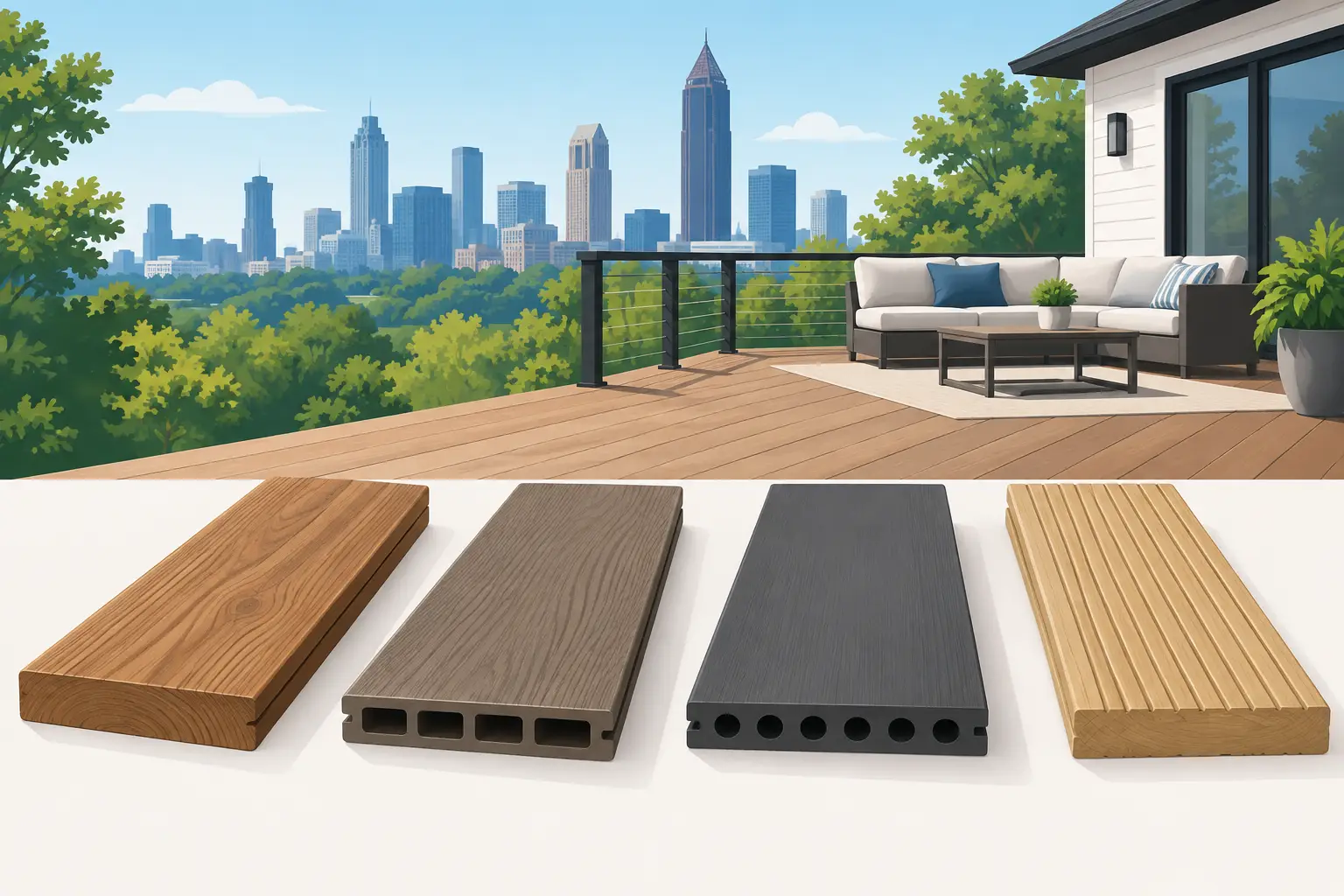
A deck in Atlanta has to handle more than weekend cookouts. It faces strong summer sun, heavy rain, humidity, pollen, and year-round use. A good decking material comparison starts with those conditions, then looks at how you plan to use the space, how much maintenance you accept, and what finish fits the rest of your home.
The right choice is not always the most expensive board or the one with the lowest upfront cost. It is the material that delivers the look, traction, durability, and long-term upkeep level your project needs. For many homeowners, the deck also needs to work with an updated porch, backyard, interior flooring, or kitchen renovation so the finished property feels connected.
Decking Material Comparison: What Matters Most
Before comparing specific materials, decide what matters most for your deck. A family deck around a pool has different demands than a covered front porch or a second-story entertaining space. Budget matters, but so do surface temperature, moisture resistance, appearance, and the condition of the supporting structure below.
In the Atlanta area, moisture management should be near the top of the list. Rain can collect between boards and under the deck. Shade from mature trees can keep a surface damp longer, while direct afternoon sun can make some boards uncomfortably hot. Installation details such as board spacing, framing, flashing, drainage, and ventilation are just as important as the material selected.
A practical comparison should account for five questions: How much maintenance are you willing to perform? Does the deck receive full sun or heavy shade? Will children, pets, or guests use it often? Do you want the character of natural wood? And are you building for a lower initial investment or a lower-maintenance ownership experience?
Pressure-Treated Wood: Practical and Familiar
Pressure-treated pine remains a common choice because it offers a natural wood deck at an accessible starting price. It can be stained in a wide range of colors and can be repaired one board at a time if damage occurs. For homeowners who want a traditional deck appearance without stretching the project budget, it often makes sense.
The trade-off is maintenance. Pressure-treated wood needs time to dry after installation before staining or sealing, and it should be cleaned and protected regularly. Without attention, boards can weather, crack, splinter, cup, or discolor. Atlanta's moisture and heat can speed up that process, especially on decks with poor drainage or limited airflow.
Wood can be a strong choice for a covered porch, a budget-conscious backyard project, or a home where periodic staining is part of the maintenance plan. It is less ideal for homeowners who want to install a deck and avoid refinishing work for years at a time.
Cedar and Other Natural Wood Options
Cedar offers a warmer, more refined grain than pressure-treated pine and has natural resistance to insects and decay. It is lighter in weight and can create an attractive porch or deck surface when properly maintained. Like other real wood products, however, it still requires cleaning, sealing, and regular inspection.
Hardwoods such as ipe provide exceptional density and a premium appearance, but they cost more and require experienced installation. Their weight, hardness, and fastening requirements affect labor and framing considerations. Natural hardwood can be worth considering when appearance is the priority, but it is not a low-maintenance shortcut.
Composite Decking: Low-Maintenance Color and Consistency
Composite decking combines wood fibers with plastic materials to create boards that resist rot, insect damage, and many common moisture problems. It is available in a broad range of colors, grain patterns, and board widths. For homeowners looking for a finished appearance that stays consistent without annual staining, composite is often the leading option.
Most composite decks need routine washing rather than sanding, staining, or sealing. That is a major advantage for busy households. Capped composite boards add a protective outer layer that improves stain and fade resistance, which can be useful around grills, dining areas, and high-traffic spaces.
There are still trade-offs. Composite usually costs more upfront than pressure-treated wood, and darker colors can hold significant heat in direct sun. Quality varies by product line, so board thickness, cap protection, warranty terms, and fastener systems should be reviewed before making a final selection. Composite can also scratch or stain, even if it is more resistant than wood.
For a backyard deck connected to a renovated interior, composite makes it easier to coordinate colors and maintain a clean, finished look over time. It is especially practical for homeowners who would rather spend weekends using the deck than refinishing it.
PVC Decking: Maximum Moisture Resistance
PVC decking is made without wood fibers, making it highly resistant to moisture, rot, and insect damage. It is a sensible option for decks near pools, areas with frequent standing water, and shaded locations where drying is slow. It is also generally lightweight and easy to clean.
PVC's primary advantage is durability in wet conditions. Its primary consideration is cost. It is usually among the higher-priced decking choices, and some homeowners prefer the more natural texture and appearance available in premium composite or real wood. Like composite, PVC can become hot in full sun, particularly in darker shades.
If keeping water out of the board itself is the top concern, PVC deserves serious consideration. The framing below still needs proper construction and ventilation. A water-resistant deck surface cannot solve problems caused by undersized joists, poor flashing, or drainage that directs water toward the home.
Aluminum Decking: Built for Water and Fire Resistance
Aluminum decking is less common in residential backyards, but it has specific strengths. It does not rot, warp, splinter, or attract insects. Many systems are designed to channel water away from the deck surface, making them useful for elevated decks with a patio or storage area below.
It is also noncombustible, which can be valuable in certain project conditions. Aluminum tends to cost more than common wood and composite options, and its appearance is more modern and industrial. Some homeowners may also notice more sound from rain or foot traffic than they would on wood-based boards.
For an elevated deck where under-deck drainage is a major priority, aluminum may be worth the investment. For a traditional backyard setting, composite or wood often provides a warmer visual fit.
Match the Material to the Deck Location
The same board can perform differently depending on where it is installed. A full-sun deck needs careful color selection because dark surfaces absorb more heat. A shaded deck needs strong drainage and regular cleaning because leaves, pollen, and moisture can support mold and mildew growth.
Poolside decks call for slip resistance, bare-foot comfort, and resistance to chemicals and standing water. Covered porches may have less direct weather exposure, which can make natural wood more practical. Raised decks require close attention to framing, posts, footings, railings, stairs, and water management regardless of the surface material.
This is where professional planning helps. A deck project is not simply a matter of laying boards across a frame. The finished surface depends on the structure beneath it, the transition to doors and siding, railing layout, code requirements, and how the deck connects to the larger yard.
Budget for the Complete Project, Not Just the Boards
Decking boards are only one part of the cost. Demolition, framing repairs, footings, railings, stairs, lighting, permits, drainage, and site access can substantially affect the final scope. A lower-priced board may not reduce the project cost as much as expected if the existing structure needs correction.
It also helps to consider the cost of ownership. Pressure-treated wood costs less initially but needs recurring cleaning, sealing, and occasional board replacement. Composite and PVC can cost more at installation while reducing routine maintenance over the years. Neither approach is automatically better. The right choice depends on how long you expect to stay in the home and how you want to spend your time after the project is complete.
Floor's Leader approaches decks and porches as part of the home's overall finish, not as an isolated exterior add-on. Material selection can be coordinated with backyard improvements, porch updates, and interior renovation work so the property feels planned rather than pieced together.
Choose a decking material that fits the way your household actually lives. A well-built wood deck can be the right answer for one home, while a low-maintenance composite or PVC surface is the better long-term fit for another. Start with the site, the structure, and your maintenance expectations, then build the outdoor space you will be glad to use every season.
Get a free quote from Floor's Leader.