
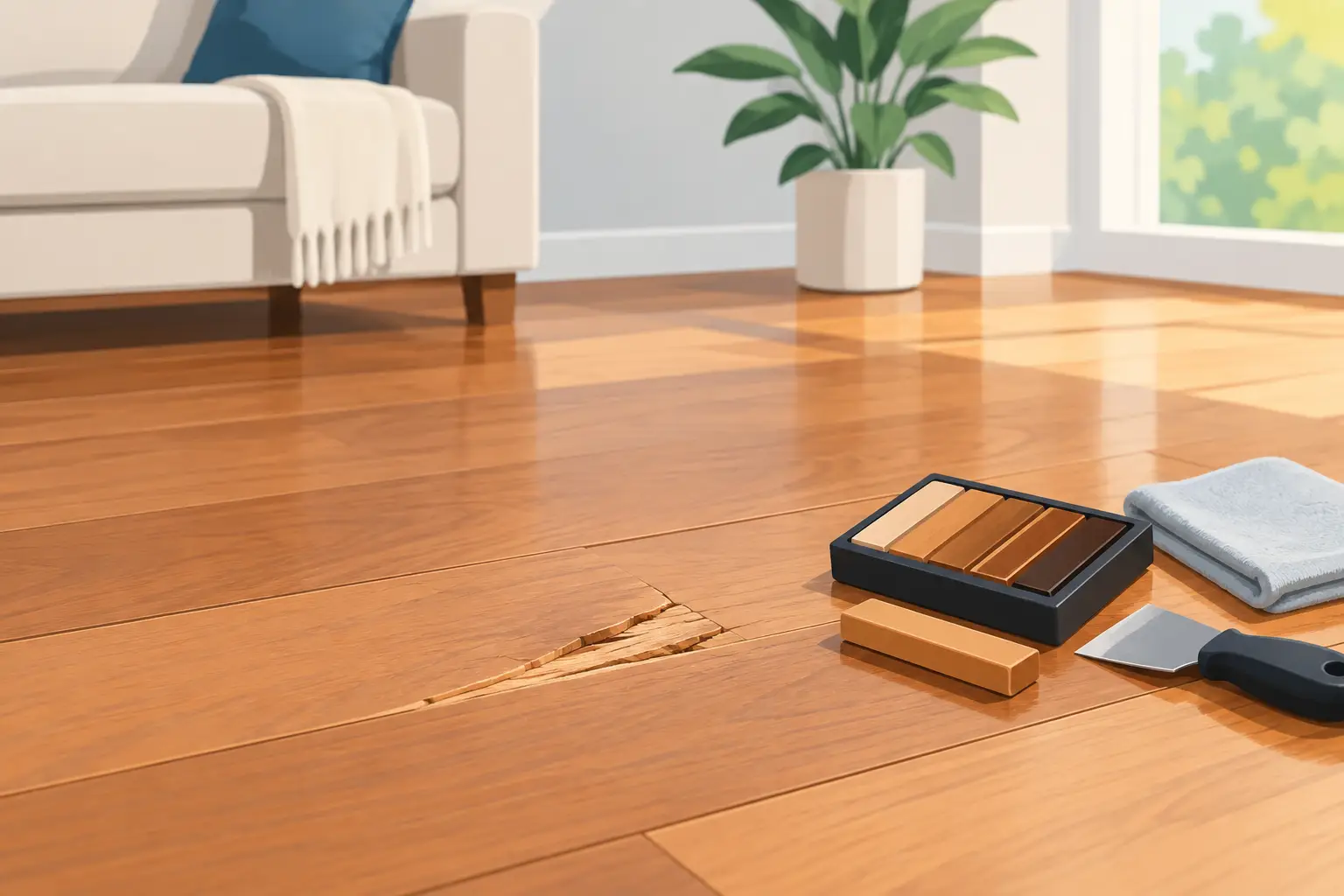
A hardwood floor can make an entire Atlanta home feel finished - until the surface is covered in scratches, the boards separate, or a dark water stain appears near a doorway. The good news is that can hardwood floors be repaired is usually a question with a positive answer. Many damaged wood floors can be repaired, refinished, or blended into the surrounding floor without replacing every board. The right approach depends on the type of damage, the thickness of the wood, and what is happening below the surface.
Can Hardwood Floors Be Repaired?
Yes, in many cases. Hardwood is one of the most repairable flooring materials in a home because solid wood can often be sanded and refinished multiple times. Individual boards can also be replaced when damage is limited to a small area.
Repair is not always the same as refinishing. A light surface scratch may only need touch-up work, while a floor with widespread dullness, worn finish, or shallow staining may need sanding and a new protective coat. Deep water damage, extensive movement, or wood that has become too thin may call for board replacement or a larger flooring project.
A professional assessment matters because similar-looking damage can have very different causes. A dark spot may be a surface stain, for example, or it may indicate moisture that has soaked into the wood and affected the subfloor. Repairing the appearance without correcting the moisture source only sets up the floor for another failure.
Damage That Can Often Be Repaired
Surface scratches and worn finish
Furniture legs, pet nails, grit from outside, and everyday foot traffic wear down a floor's finish over time. If scratches affect only the protective coating and not the wood itself, the fix may be relatively simple. A thorough cleaning, screen-and-recoat service, or selective touch-up can restore protection and improve the floor's color consistency.
When the scratches reach bare wood, sanding and refinishing may be the better choice. This removes a thin layer of the damaged surface and gives the room an even new finish. It is especially effective for floors that look generally tired across several connected rooms.
Small gouges, cracks, and missing wood
Minor gouges and small cracks can often be filled with a wood-compatible filler before refinishing. A damaged plank with a deeper split, chipped edge, or missing piece can usually be removed and replaced without tearing out the entire floor.
Matching the replacement board is the challenge. Wood species, board width, grain pattern, stain color, age, and sun exposure all affect how the new piece will look. A newly installed board may stand out at first, but sanding and finishing the repaired section with the surrounding floor can create a much more natural result.
Stains from spills and pets
Surface-level stains may lift during sanding. Pet stains are less predictable because urine can penetrate deeply, darken the wood, and leave an odor that remains even after refinishing. In those areas, replacing affected boards is often more reliable than trying to sand through the damage.
The same is true for stains around old plant pots, window leaks, and appliance lines. The floor may be repairable, but the source of moisture has to be corrected first. Otherwise, new boards and new finish can be damaged again.
Seasonal gaps and minor movement
Atlanta's humid summers and drier indoor winter conditions can cause hardwood to expand and contract. Narrow gaps that appear seasonally are often normal, particularly in older homes. They may close when humidity returns and do not necessarily require filler or replacement.
Gaps that stay open year-round, boards that shift noticeably, or edges that rise above neighboring boards deserve a closer look. Those signs can point to installation issues, moisture imbalance, or movement in the subfloor.
When Refinishing Is the Best Repair
Refinishing is usually the strongest option when the floor is structurally sound but its surface has reached the end of its useful life. It can address widespread scratches, fading, dull finish, light discoloration, and minor unevenness. It also gives homeowners an opportunity to update the stain color or choose a more natural look.
Solid hardwood is generally the best candidate because it has a substantial wear layer. Depending on the product and its condition, it may be sanded more than once over its lifetime. Engineered hardwood can sometimes be refinished too, but it depends on the thickness of its real-wood veneer. Some engineered products have enough material for a careful refinishing; others do not.
This is why an inspection should happen before a contractor recommends sanding. Aggressive sanding on a thin engineered floor can expose the plywood core. A good repair plan protects the floor's remaining service life rather than chasing a short-term cosmetic fix.
Water Damage Changes the Decision
Water damage is where repair decisions become more complicated. Hardwood can tolerate a quick, small spill that is cleaned promptly. It does not respond well to prolonged moisture from a leaking refrigerator, plumbing issue, overflowing toilet, wet crawl space, or repeated rain intrusion.
Cupping, where board edges rise higher than their centers, often occurs when the underside of the wood holds more moisture than the top. Crowning is the reverse condition, with centers higher than edges. Both can sometimes improve after the area is dried and moisture levels are stabilized. Sanding too early can make the problem worse, so drying and diagnosis come first.
Boards that are severely warped, loose, blackened, soft, or mold-affected are less likely to be saved. Replacement may be necessary, along with repair to the subfloor or moisture source. This is not a situation for covering the damage with a rug and hoping it settles down.
Signs Replacement May Be the Better Investment
Repair is valuable when it preserves a sound floor. Replacement becomes the more practical choice when the floor has ongoing structural problems or when repeated repairs would leave an uneven result.
Consider replacement when the wood is too thin for another sanding, damage extends through a large portion of the room, boards have widespread movement, or moisture has compromised the subfloor. Replacement can also make sense when homeowners want to change the flooring layout, remove mismatched patches from past repairs, or extend flooring into an adjacent room.
A partial replacement can work well when material is available and the damage is contained. For older floors, finding an exact match may be difficult. In that case, a contractor may install complementary wood and refinish the full connected area to make the transition feel intentional.
Why Repair Work Should Start With the Whole Room
Hardwood repairs affect more than the damaged boards. Sanding changes the floor height slightly. New stain can look different under existing trim, cabinets, or transitions to tile. Dust control, furniture moving, ventilation, and cure time all need to be planned before work begins.
This broader view is especially useful during a remodel. If a kitchen update, wall removal, or new exterior door is part of the plan, flooring repairs should be coordinated with those changes. Doing the floors first and then cutting into them for later construction can add unnecessary patching and cost.
For homeowners planning connected improvements, Floor's Leader can evaluate hardwood repairs alongside remodeling, kitchen, deck, porch, and entry upgrades. The goal is not simply to make one damaged area less noticeable. It is to leave the home with finishes that work together and hold up to daily use.
What Homeowners Can Do Before an Assessment
Do not apply wax, oil, or store-bought coating products to a damaged floor before it is evaluated. These products can interfere with adhesion if the floor later needs a new finish. Avoid soaking the floor during cleaning, and place felt pads under furniture that is still in use.
If water is involved, remove rugs and dry the area quickly. Note where the moisture came from and whether the boards have changed shape. Photos taken when the damage first appears can help identify whether the condition is spreading.
For scratches and stains, it also helps to know the floor's history: its approximate age, whether it is solid or engineered wood, prior refinishing work, and any previous leaks. Those details help determine whether a targeted repair, refinishing, or replacement will deliver the best result.
Hardwood floors do not have to look perfect to be worth saving. What matters is whether the wood is stable, dry, and thick enough to repair properly. A clear assessment gives you a practical path forward - one that protects the character of the existing floor while avoiding repairs that will not last.
Get a free quote from Floor's Leader.