
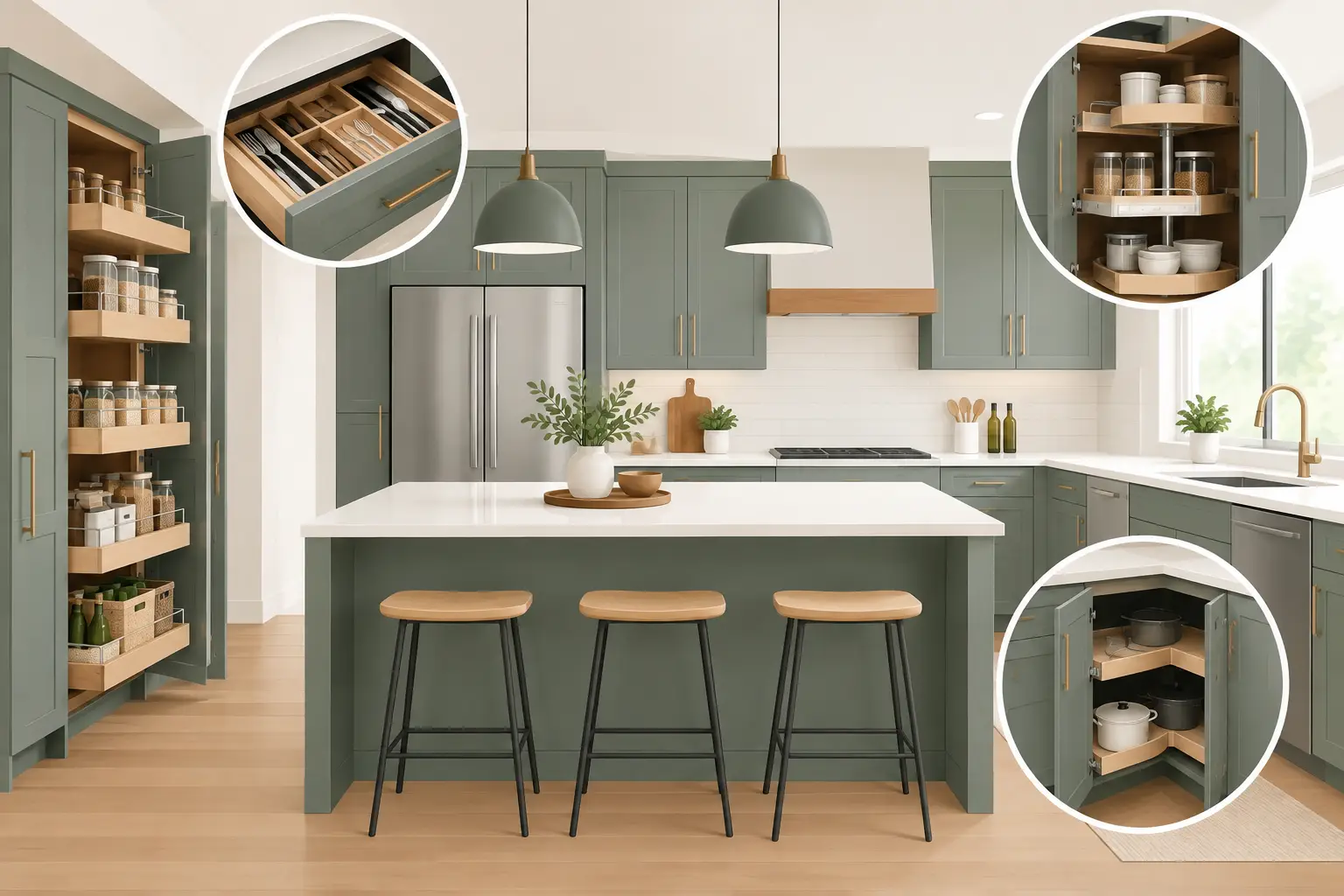
A kitchen can have new cabinets, fresh flooring, and updated counters yet still feel frustrating to use if the storage plan is weak. The best kitchen storage upgrades solve the daily problems homeowners actually notice: crowded counters, hard-to-reach pans, wasted corners, and a pantry where food disappears behind larger packages.
For a kitchen remodel, storage should be planned around how the room works, not added as an afterthought. A well-built cabinet layout puts everyday items where they are needed, keeps heavy items accessible, and gives the space a cleaner finished look. That matters whether you are updating a compact kitchen in Marietta or opening up a larger family kitchen elsewhere in metro Atlanta.
Start With the Problems in Your Current Kitchen
Before choosing cabinet accessories, look at what is not working now. A homeowner who cooks often may need more space beside the range for pots, oils, and utensils. A busy family may need a pantry system that makes snacks, lunch supplies, and small appliances easier to find. Someone who entertains may benefit more from a dedicated serving-piece cabinet or beverage station than from another standard shelf.
This step prevents a common remodeling mistake: filling a kitchen with trendy features that do not match the household. Storage upgrades take up cabinet space and add cost, so each one should earn its place.
Pay attention to counter clutter as well. If the toaster, mixer, coffee maker, and knife block are always out, the issue may not be a lack of counter space. It may be that the cabinets do not provide a practical home for the items used every day.
Best Kitchen Storage Upgrades That Add Daily Value
Deep Drawer Bases for Pots, Pans, and Dishes
Deep drawers are one of the most useful replacements for lower cabinet shelves. Instead of kneeling down and reaching into a dark cabinet, you can pull the contents toward you. They work especially well for cookware, mixing bowls, food-storage containers, and stacks of everyday plates.
For many homeowners, drawers below the cooktop or near the dishwasher make more sense than standard base cabinets. They keep heavy items at a comfortable height and make unloading clean dishes faster. Add adjustable dividers for lids, pans, or dishes if the cabinet will hold several types of items.
There is a trade-off. Quality drawer hardware and reinforced drawer boxes cost more than basic shelving. They are usually worth the investment in high-use areas, while less frequently used zones can remain simple cabinets.
Pullout Trash and Recycling Centers
A freestanding trash can is easy to overlook until it interrupts the layout or becomes a visual distraction. A pullout trash and recycling cabinet keeps waste contained, makes cleanup more convenient, and gives the kitchen a more finished appearance.
The best location is usually close to the sink, dishwasher, and primary prep area. That placement makes it easier to scrape plates, discard packaging, and clean up as you cook. In a smaller kitchen, a double-bin pullout can also eliminate the need to find room for separate trash and recycling containers.
Choose the cabinet width based on the size of bins your household needs. A narrow pullout may work for a couple, but a busy household can fill it quickly. It is better to plan for realistic capacity than to hide a bin that must be emptied every day.
Pantry Pullouts That Use Full Cabinet Depth
Standard pantry shelves often create dead space in the back. Pantry pullouts bring food forward, making canned goods, spices, baking supplies, and dry goods easier to see. They can be installed in a tall pantry cabinet or in a lower cabinet near the prep zone.
Full-height pullout systems are especially effective for kitchens without a walk-in pantry. They create organized vertical storage in a relatively small footprint. Adjustable shelves allow the space to change as your household's needs change.
A walk-in pantry is not automatically the better choice. It requires floor space, and poorly designed walk-ins can become crowded storage rooms. In some remodels, a well-organized cabinet pantry with pullouts provides easier access and keeps the kitchen layout more open.
Corner Cabinet Solutions
Corners are among the most wasted areas in older kitchens. A basic corner cabinet can hold a surprising amount, but reaching the back is difficult. Modern corner storage options make the space more useful without forcing homeowners to crawl into the cabinet.
A pullout corner system can bring shelves outward as the cabinet opens. A rotating shelf system can also work for pots, small appliances, or serving pieces. The right option depends on the cabinet size and what will be stored there.
Corner accessories are not always necessary. If the budget is focused on better drawers and a functional pantry, a simple corner cabinet may be enough for occasional-use items. But when a kitchen is short on storage, improving that corner can make a noticeable difference.
Vertical Dividers for Trays and Cutting Boards
Baking sheets, cooling racks, cutting boards, and serving trays are awkward to stack. Vertical dividers turn a narrow cabinet into an organized storage zone where these items can be stored upright and pulled out one at a time.
This upgrade works well in an upper cabinet near the oven or in a base cabinet near the main prep area. It is a small detail, but it prevents the noisy, frustrating pile of pans that slides out whenever one piece is needed.
A Real Place for Small Appliances
Small appliances are a major source of kitchen clutter. Some homeowners prefer an appliance garage with a door that hides the coffee maker or toaster while keeping it on the counter. Others would rather use a dedicated lower-cabinet pullout for mixers, blenders, and larger appliances.
An appliance lift can be helpful for a heavy stand mixer because it raises the mixer to counter height without lifting. However, it needs adequate cabinet space and should be selected for the appliance's actual weight and dimensions. For a kitchen with limited storage, a deep drawer may provide more flexible value than a specialty lift.
Build Storage Around Kitchen Work Zones
The strongest kitchen layouts group storage by task. Keep pots, utensils, and cooking oils near the range. Store knives, cutting boards, mixing bowls, and prep tools close to the main counter workspace. Put dishes, glasses, and flatware near the dishwasher so cleanup is not spread across the room.
The pantry should be easy to reach from the refrigerator and prep zone, while serving pieces can sit farther away if they are used less often. This approach reduces unnecessary steps and makes the kitchen feel calmer during busy mornings and family dinners.
Cabinet storage also needs to work with the rest of the renovation. New hardwood or other flooring, improved lighting, backsplash selections, and cabinet finishes should create one coordinated room. A well-planned remodel does more than add features. It makes the kitchen easier to maintain and more enjoyable to use.
Do Not Overload Every Cabinet With Accessories
Storage accessories are useful, but a kitchen does not need a mechanism in every cabinet. Too many specialized inserts can reduce flexibility, add expense, and make future changes harder. A household's routines can shift over time, especially as children grow or work schedules change.
Prioritize the places that cause the most frustration: the pots and pans cabinet, pantry, trash area, corner cabinet, and small-appliance storage. Then leave some shelves or drawers open for items that may change. Adjustable organization is often more valuable than a kitchen full of fixed compartments.
Cabinet quality matters here. Pullouts, deep drawers, and heavy storage systems rely on solid construction, proper installation, and durable hardware. A feature that looks good in a showroom will not perform well if it binds, sags, or cannot handle the weight placed inside it.
Plan Storage Before Cabinets Are Ordered
The best time to make storage decisions is during kitchen design, before cabinet orders are finalized and before plumbing or electrical locations are set. This is when you can decide whether a trash pullout belongs beside the sink, whether a pantry needs power for small appliances, and whether drawer bases should replace lower shelves.
Walk through a normal day in the kitchen. Picture bringing groceries in, making coffee, packing lunches, cooking dinner, loading the dishwasher, and putting everything away. That practical exercise often reveals which storage upgrades will make the biggest difference.
A better kitchen is not defined by the number of accessories inside its cabinets. It is defined by how easily your household can cook, clean, gather, and put the room back in order when the day is done.
Get a free quote from Floor's Leader.