
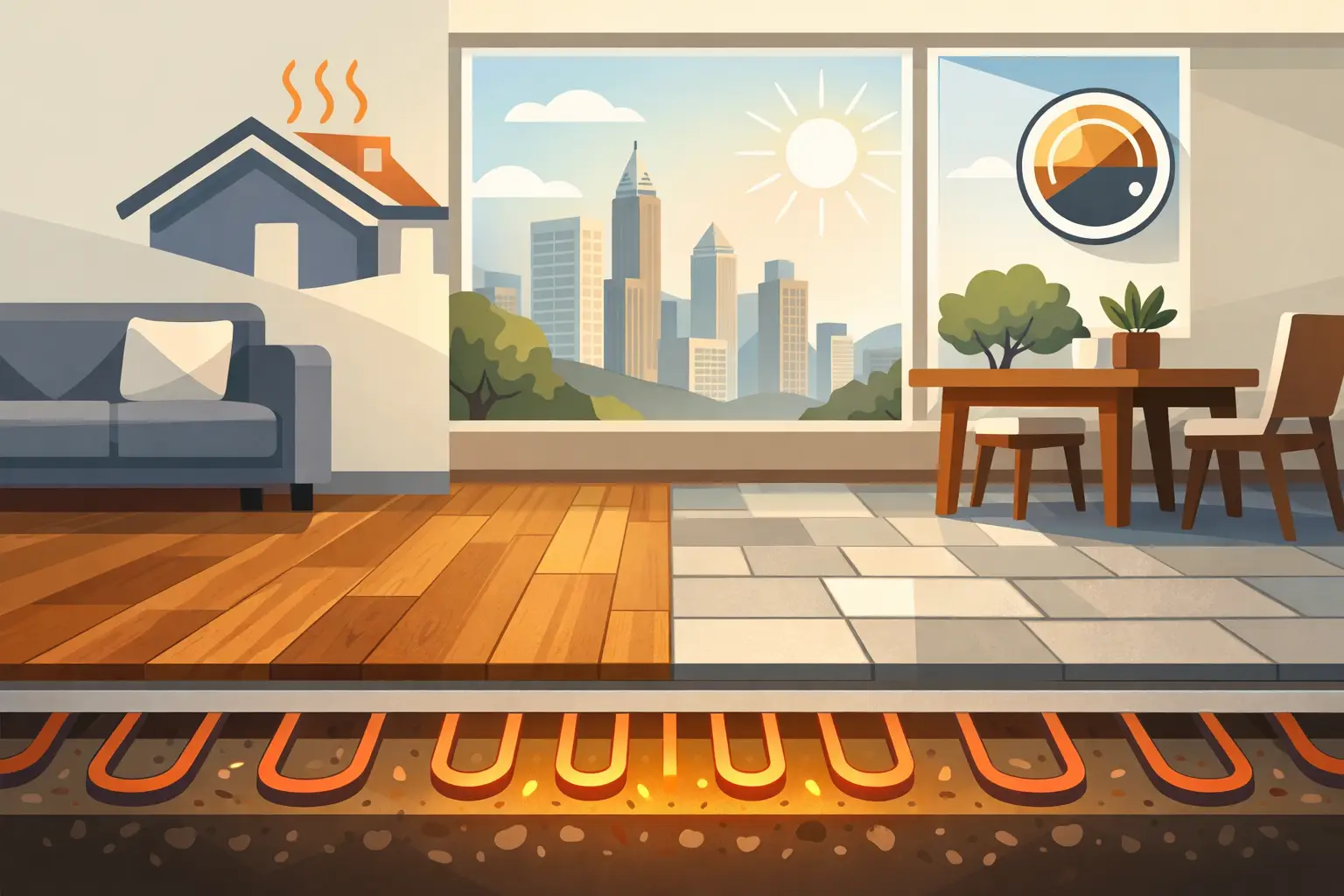
Radiant heat changes what a floor needs to do. Instead of simply looking good and handling foot traffic, the material must transfer warmth efficiently while staying stable through repeated heating cycles. The best flooring for radiant heat depends on your room, your heating system, and the look you want, but a few materials consistently perform better than others.
For Atlanta homeowners, the decision is often part of a larger renovation. A kitchen update may lead to new flooring through adjoining living spaces. A main-level remodel may need surfaces that coordinate with existing hardwood while adding more comfort during cool mornings. Choosing the right material early helps avoid costly changes after installation begins.
What Makes Flooring Work With Radiant Heat?
Radiant systems heat the floor from below, either through hydronic tubing that carries warm water or electric cables and mats. The flooring above that system needs to let heat pass through without acting like insulation. It also needs to handle gradual expansion and contraction as the temperature changes.
In practical terms, thinner and denser materials generally move heat more effectively. Tile is a strong conductor. Engineered wood offers the warmth and appearance of hardwood with better dimensional stability than many solid wood products. Some vinyl and laminate products can work well, but only when the manufacturer approves them for radiant heat.
The system should be designed as a complete assembly, not just a heating product with flooring placed on top. Subfloor condition, moisture levels, underlayment, adhesives, floor thickness, and temperature controls all affect the finished result. A beautiful floor can still develop gaps, cupping, adhesive failure, or uneven heat if those details are skipped.
Best Flooring for Radiant Heat: Top Choices
Porcelain or Ceramic Tile
Porcelain and ceramic tile are often the top choice where heat performance is the priority. They conduct and retain warmth well, which means the heat reaches the room efficiently and the floor stays comfortable after the system cycles off. Tile is especially practical in bathrooms, kitchens, laundry rooms, entryways, and finished basements.
Porcelain is usually the tougher option for active households because it resists moisture, scratches, and wear. It also gives homeowners a wide range of looks, including natural stone, concrete, and wood-look planks. The trade-off is that tile installation requires a properly prepared, flat substrate. Cracked or moving subfloors can lead to cracked grout or tile over time.
Engineered Hardwood
For homeowners who want real wood floors, engineered hardwood is usually the best match for radiant heat. It is built with a hardwood surface layer over a layered core, which makes it more stable than solid hardwood as temperatures and humidity change.
That does not mean every engineered wood floor is automatically compatible. Product construction matters. Wider boards, thicker materials, and certain wood species can react differently to heat. The flooring manufacturer should clearly approve the product for the specific radiant system, and the installer must follow its temperature limits.
Engineered hardwood is a strong choice for open living areas, bedrooms, dining rooms, and hallways where homeowners want a continuous, finished look. It can also coordinate naturally with a larger renovation that includes stair treads, kitchen updates, or transitions into other rooms. In Atlanta, where seasonal indoor humidity can shift, proper acclimation and moisture testing are essential before installation.
Luxury Vinyl Plank and Luxury Vinyl Tile
Luxury vinyl can be a practical option for radiant heat, particularly in homes that need water resistance and a lower-maintenance surface. Quality luxury vinyl plank and tile products are comfortable underfoot, easy to clean, and available in wood and stone visuals that fit many renovation styles.
The key is product approval. Some vinyl flooring has a maximum allowable floor temperature, commonly around 80 to 85 degrees Fahrenheit. Exceeding that limit can cause discoloration, expansion, curling, or damage to the wear layer. A thermostat with a floor sensor helps keep temperatures within the flooring manufacturer's guidelines.
Vinyl does not transfer heat as quickly as tile, but it can still work effectively when installed correctly. It is often a sensible choice for kitchens, basements, bathrooms, and family spaces where spills, pets, and daily traffic are part of the picture.
Laminate Flooring
Laminate can work over radiant heat when the product is rated for it, but it requires more care than tile or engineered wood. Its fiberboard core is more sensitive to moisture, and excessive heat can affect joints and cause movement. A suitable underlayment is also critical. An underlayment with too much insulating value can reduce the system's efficiency.
For homeowners working within a tighter flooring budget, radiant-approved laminate can provide a clean, durable finish. It is not the best choice for consistently wet areas, and it should not be selected based on appearance alone. Confirm the approved installation method, maximum temperature, and moisture requirements before making a final decision.
Flooring That Needs Extra Caution
Solid hardwood can be installed over some radiant systems, but it is rarely the easiest or lowest-risk option. Wood naturally expands and contracts with changes in heat and humidity. Narrower boards, stable species, careful acclimation, and conservative temperature settings can reduce that risk, yet engineered hardwood is generally the more dependable choice.
Carpet is also possible, but it is not ideal if you want maximum heat output. Carpet and thick padding act as insulation, slowing the transfer of warmth into the room. If carpet is necessary for a bedroom or upstairs space, choose a low-pile carpet and low-insulation pad that are approved for radiant systems.
Natural stone performs very well with radiant heat, much like tile, but it adds weight and cost. Some stones also need periodic sealing. It can be an excellent fit for a high-end bath, entry, or kitchen, provided the structure and subfloor are prepared for it.
Installation Details Matter as Much as the Material
The wrong installation approach can undermine even the best flooring choice. Before flooring goes down, the radiant system should be tested, the subfloor should be checked for flatness and moisture, and the flooring should be acclimated according to manufacturer instructions.
Heat should be brought up gradually after installation, not turned to maximum immediately. This gives adhesives, grout, wood, and other materials time to adjust. For wood and vinyl, steady temperatures are better than frequent, dramatic swings. A programmable thermostat and floor sensor give homeowners more control than relying on air temperature alone.
It also helps to think about transitions before the project starts. Tile, engineered hardwood, and vinyl often have different finished heights. Planning those details keeps doorways, stair landings, and adjoining rooms looking intentional instead of pieced together.
Choosing for the Room, Not Just the Sample
A flooring sample can look right under showroom lighting and still be the wrong choice for the room. Start with function. Tile or porcelain makes sense in a bathroom where moisture and bare feet are daily concerns. Engineered hardwood may be better for a living room where visual warmth and continuity matter most. Vinyl can be a smart solution where children, pets, and spills call for a durable surface.
Then consider how the room connects to the rest of the house. If a kitchen renovation opens into a hardwood living area, selecting compatible colors, board widths, and transition details matters as much as the heating performance. Floor's Leader approaches flooring as part of the finished home, not as an isolated material decision.
The right floor should feel good in January, hold up through everyday life, and support the overall look of your renovation. Bring the radiant heat plan into the flooring conversation early, and you can build a space that is comfortable, durable, and ready to enjoy for years.
Get a free quote from Floor's Leader.