
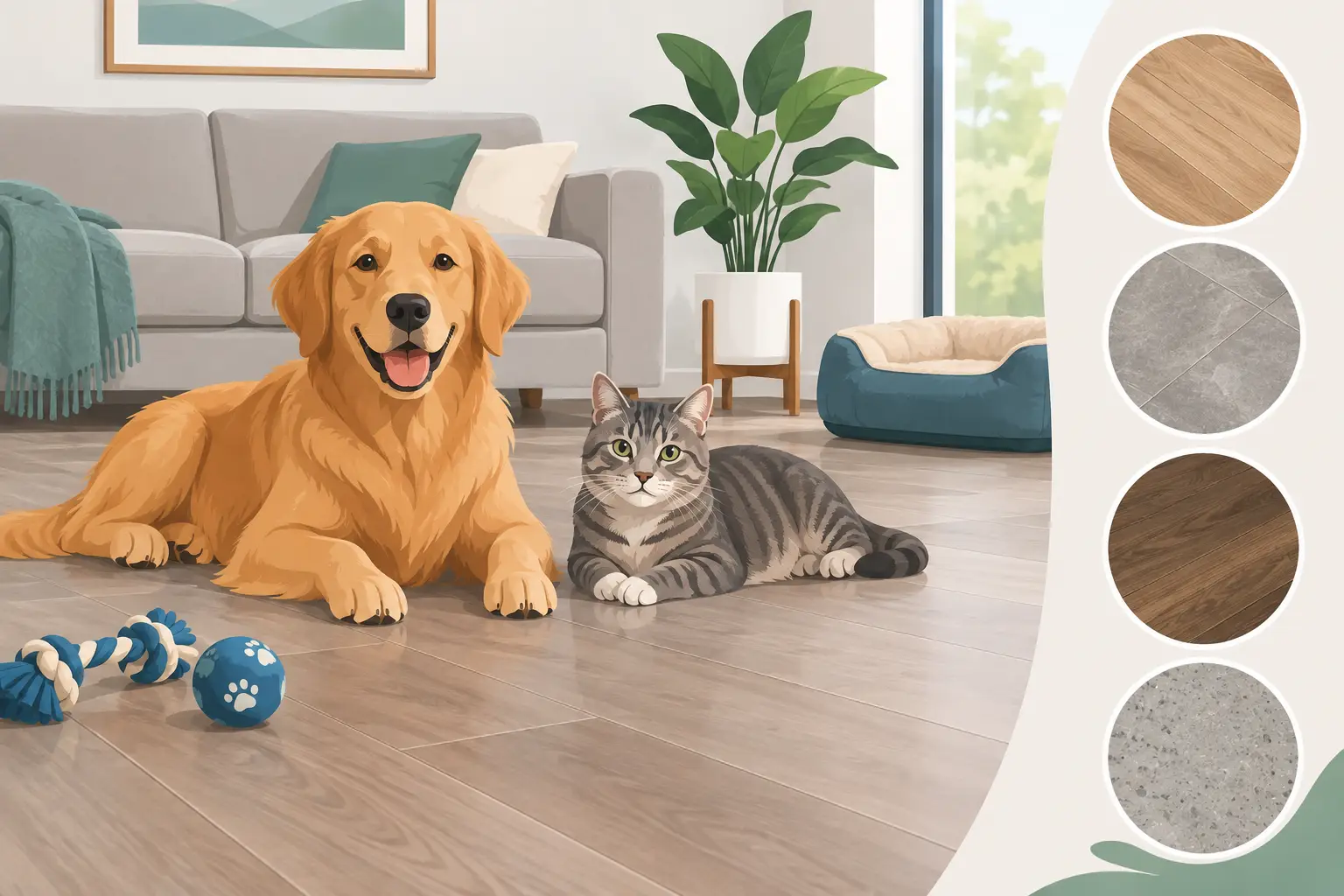
A new floor can look perfect on installation day and show every paw-print, nail scratch, and water-bowl spill a month later. The best floor options for pets are not simply the hardest materials available. They are the surfaces that fit your pet's habits, your household's traffic, and the rooms you use every day.
For Atlanta homeowners, that decision also includes humidity, muddy spring and summer walks, and the desire for a finished home that feels connected from the entryway to the kitchen, living room, and beyond. A good flooring plan accounts for all of it before the first plank or tile is installed.
What Pet-Friendly Flooring Needs to Handle
Pets create a different kind of wear than shoes and furniture. Dogs can scratch a finish as they turn corners or rush to the front door. Water from bowls, wet paws, and accidents can reach seams and edges. Cat litter may be abrasive underfoot, while shedding means you will notice dust and hair faster on some colors and textures than others.
The right material should be easy to clean, reasonably scratch resistant, stable when indoor humidity changes, and comfortable enough for both people and animals. Slip resistance matters, too. A glossy floor may look sharp in a showroom, but a pet that cannot gain traction on it can be uncomfortable and may slide into cabinets or furniture.
There is no single winner for every house. A family with two large dogs needs something different from a household with an older indoor cat. The room matters as much as the pet. A kitchen needs stronger moisture protection than a quiet upstairs bedroom.
Best Floor Options for Pets by Material
Luxury vinyl plank: the practical all-around choice
Luxury vinyl plank, often called LVP, is a strong choice for active homes because it handles everyday moisture well, cleans easily, and offers a softer, warmer feel than tile. Quality products have a protective wear layer that stands up well to pet traffic and can convincingly recreate wood or stone looks.
It is especially useful in kitchens, hallways, basements, mudrooms, and open living areas where pets move in and out. Most spills can be wiped up without worry, and a textured, low-gloss finish helps hide paw prints and minor scuffs better than a smooth, shiny surface.
The trade-off is that vinyl is not indestructible. Sharp nails, dragged furniture, and grit caught under a dog bed can still mark it. Also, “waterproof” describes the flooring material, not every edge of the installation. Proper preparation, tight seams, and careful detailing around exterior doors and cabinets still matter.
Porcelain tile: best for water, messes, and heavy traffic
Porcelain tile is among the most durable choices for homes with pets. It resists water, stains, and scratches better than nearly any residential flooring material. For a busy kitchen, laundry room, bathroom, or entry where wet shoes and paws are common, it provides long-term protection.
Tile also works well when you want a continuous indoor-outdoor look near a covered porch or backyard access point. Choose a matte or lightly textured tile rather than a polished finish. It gives better traction and does a better job hiding everyday marks.
Its main drawback is comfort. Tile is hard and can feel cool, particularly for older pets that spend a lot of time lying down. Area rugs with non-slip pads can soften favorite resting spots, but they should not become a substitute for selecting a safe finish. Grout also needs attention: a quality grout and proper sealing where appropriate make cleanup easier and reduce staining over time.
Engineered hardwood: the wood-floor option with more stability
Homeowners who want real wood should not assume pets rule out hardwood completely. Engineered hardwood can be an excellent fit in living rooms, dining rooms, bedrooms, and connected main-level spaces. Its layered construction makes it more stable than solid hardwood when humidity fluctuates, which is helpful in Atlanta homes.
For pet households, species and finish make a major difference. Oak and hickory generally perform better than softer woods. A matte finish and a natural grain pattern will disguise small scratches more effectively than a dark, glossy floor. Wider variation in color is also forgiving when life gets busy.
Hardwood requires realistic expectations. Large dogs with untrimmed nails can leave marks, and standing water should be cleaned up promptly. Yet many homeowners prefer the character that develops over time and appreciate that quality engineered wood can often be renewed, depending on its wear layer. It is a strong choice when warmth, value, and a finished look are priorities, provided moisture-prone rooms use another material.
Laminate: a budget-conscious option with limits
Modern laminate can offer a durable wear surface and a convincing wood appearance at a lower cost than hardwood. It performs well against everyday scratching, making it a reasonable option for bedrooms, living rooms, and low-to-moderate moisture areas.
The key is choosing a product designed for water resistance and having it installed correctly. Traditional laminate is vulnerable when water reaches seams or sits along edges. A tipped water bowl left unnoticed can cause more damage than it would on vinyl or tile. For homes with frequent accidents, very young pets, or pets that track in rain, luxury vinyl is usually the safer choice.
Carpet: best kept for limited, low-risk spaces
Carpet is comfortable and quiet, and it can give pets more traction than hard surfaces. But it is rarely the best main-floor choice for a household with frequent shedding, accidents, or muddy paws. Odors and stains can reach the pad, and even routine cleaning becomes more demanding.
It can still make sense in an upstairs bedroom, a low-traffic office, or a room used primarily by people rather than pets. If you choose carpet, select a stain-resistant style with a low or medium pile. Avoid looped fibers that can catch claws, and consider a moisture-resistant pad to provide a little more protection below the surface.
Match the Floor to the Room and Your Pet
A whole-house flooring project does not need to use one material everywhere. In fact, mixing materials strategically often produces a better result. Porcelain tile near an exterior door can handle wet paws, while engineered hardwood carries a warm, cohesive look through the main living area. Waterproof vinyl may be the better bridge for a kitchen, breakfast area, and family room where cleanup is a daily concern.
Pay attention to transitions. They should be clean, level, and planned around doorways or natural changes in the space. A well-designed transition makes different materials feel intentional rather than pieced together.
Pet age is another factor. Puppies and kittens bring more accident risk. Large, energetic dogs create more impact and nail wear. Senior pets often benefit from floors with better traction and less hardness underfoot. If a pet already struggles to stand or walk on smooth surfaces, a highly polished tile or slick vinyl finish is unlikely to improve the situation.
Installation Details Matter as Much as Material
Even the right flooring can disappoint if the subfloor is uneven, moisture conditions are ignored, or perimeter gaps are not handled properly. Moisture testing is particularly important before hardwood or engineered wood installation. In older homes, subfloor repairs may be needed to prevent squeaks, movement, or uneven areas that shorten the floor's life.
Color and finish deserve the same practical thinking. Very dark floors show light pet hair and dust. Very light, uniform floors can show dark hair and dirt. Mid-tone colors, natural wood variation, subtle texture, and low-sheen finishes are often the easiest choices to live with.
At Floor's Leader INC, flooring decisions are approached as part of the larger home, not as an isolated surface change. When a kitchen renovation, new deck access, or refreshed living area is planned at the same time, the flooring can be selected around how the spaces connect and where pets and people actually travel.
Simple Habits That Protect Any Pet-Friendly Floor
Keep nails trimmed, place absorbent mats at exterior doors, and use a tray or waterproof mat below water bowls. Sweep or vacuum grit regularly because small particles act like sandpaper under paws and furniture. Clean spills promptly, especially along plank seams and near baseboards.
Avoid harsh cleaners, steam methods, or soaking wet mops unless the flooring manufacturer specifically permits them. The wrong cleaning routine can dull a protective finish, leave residue that makes floors slippery, or force moisture into places it does not belong.
The best choice is the one that supports the way your household lives, not just the way a sample looks under showroom lights. Start with the rooms that take the most wear, choose a finish you can maintain without constant worry, and build outward from there. A floor that handles paws, play, and everyday cleanup gives the rest of your renovation room to look its best.
Get a free quote from Floor's Leader.